3D printing service for consumer electronics — from prototype to production.
Consumer electronics move fast. Timelines are tight, tolerances are unforgiving, and every design iteration matters. We produce enclosures, internal brackets, buttons, connectors, and full assemblies across multiple 3D printing technologies and 23 materials — from early-stage prototyping through scaled production runs. Whether you're building a first proof-of-concept in PLA, running fit-checks with Standard Resin, stress-testing snap-fits in Durable Resin, or shipping bridge production parts in MJF Nylon — we match the material to the stage of your development cycle.








Challenges we solve
How our 3D printing service supports consumer electronics teams
Tight tolerances on small parts
Electronics housings and snap-fit assemblies demand dimensional precision — a 0.3mm deviation can mean a PCB that does not seat or a button that sticks. Our SLA platform holds ±0.2mm across the full build volume. For FDM parts, we optimize print orientation and process parameters to minimize warpage on thin-walled enclosures.
Material variety for functional testing
Different components in a single product need different mechanical properties — rigid housings, flexible gaskets, heat-resistant internals, optically clear light pipes. Rather than sourcing from multiple vendors, our 3D printing service offers 23 materials across multiple technologies. You get a single point of contact, consistent quality standards, and the ability to test with production-representative parts from the first prototype.
Fast iteration cycles
Hardware design reviews happen weekly. Waiting two weeks for prototype parts means missing sprint deadlines and delaying validation. We turn around FDM prototypes in as fast as 1 business day, SLA in 2 business days — and for rush orders, we can often deliver next-day for NYC-based teams. Every file gets a pre-production review to catch orientation issues, unsupported features, or tolerance risks before the printer starts.
Bridge to injection molding
Not ready to commit to $30K–$80K in mold tooling? Our MJF Nylon PA12 and PA11 deliver mechanical properties close to injection-molded nylon — tensile modulus of 1.7–1.8 GPa, HDT of 175–185°C — at quantities from 50 to 5,000+ parts. This lets you ship product, gather field data, and iterate on design before locking in tooling geometry. When you are ready for molds, our STEP files and dimensional data transfer directly to your tooling vendor.
Materials
Materials for consumer electronics
For rigid housings and enclosures, PETG on FDM offers the best balance of strength, chemical resistance, and cost. Tough 2K on SLA delivers higher precision and a smoother surface finish when appearance matters — ideal for consumer-facing parts that will be painted or textured. PLA is the most cost-effective starting point for form-factor checks and early design reviews. Standard Resin on SLA gives you the best surface finish in our catalog — ideal for visual prototypes, fit-checks, and client-facing models. Durable Resin handles snap-fits, living hinges, and parts that take repeated stress without cracking. When you need production-grade nylon parts that approximate injection-molded ABS or PA6, MJF Nylon PA12 delivers consistent mechanical properties across every unit in a batch.
PLA
FDM · Shore D 81
General purpose, biodegradable. Rigid, good surface finish. Not heat or UV resistant.
PETG
FDM · Shore D 74
Tough, chemical resistant. Good balance of strength and flexibility.
Standard Resin
SLA · Shore D 78
Smooth surface, fine detail. Good for visual prototypes and concept models.
Nylon PA12
MJF · Shore D 73
Strong, lightweight, chemical resistant. The standard for functional end-use parts. Excellent fatigue resistance and consistent mechanical properties.
Durable Resin
SLA · Shore D 58
Polypropylene-like. Flexible, fatigue resistant. Good for snap fits and living hinges.
Tough 2K
SLA · Shore D 76
ABS-like toughness with SLA detail. Functional prototypes that need impact resistance.
Common parts
Parts we produce for consumer electronics
Our work
Consumer Electronics projects


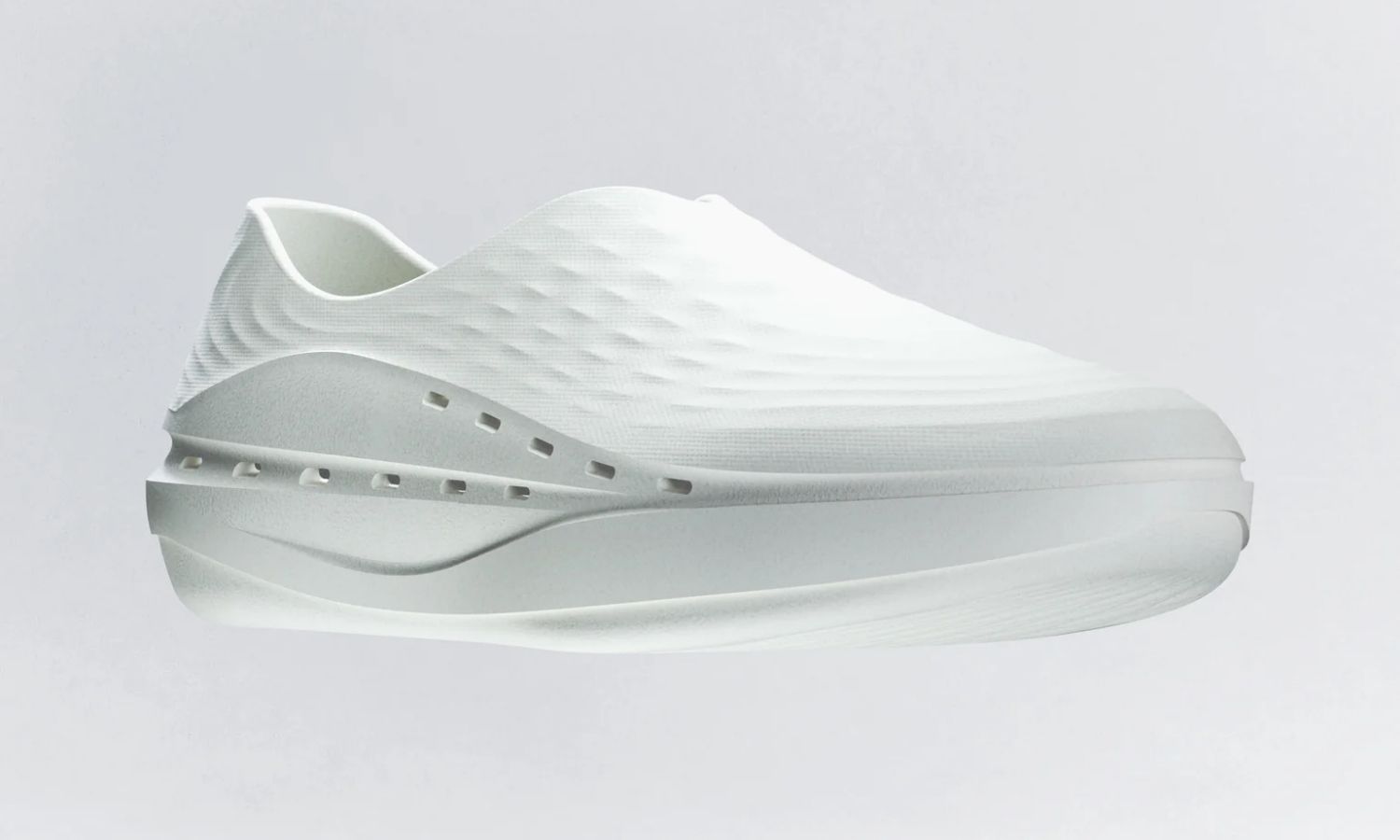
Michael Kors Shoe Prototype
Michael Kors needed a high-fidelity footwear prototype that could replicate the look and feel of the final product for internal design review. Using SLA, we produced a high-fidelity prototype with precise dimensional accuracy and smooth surface finish — capturing the design intent across the sole, upper, and detailing. The result was a realistic prototype delivered on a compressed timeline to support fast decision-making.

Stand+ Wellness Footwear Prototyping
Stand+ needed functional prototypes that could be physically worn and tested by real users. Using SLA with Durable Resin, we produced functional footwear prototypes with the flexibility and durability needed for physical wear testing. The prototypes featured varying properties — rigid structural elements combined with flexible cushioning zones — all in a single print. This allowed the Stand+ team to compress months of traditional prototyping into about a week, testing fit, comfort, and biomechanics before committing to tooling.

Transitioning from In-House to Scaled Production
This consumer tech company had been 3D printing parts in-house but hit capacity limits as demand scaled. We took over their production workflow, delivering consistent, production-ready PLA parts on our FDM fleet without requiring them to commit to large minimum orders. Our flexible production model allowed them to scale up and down with demand, maintaining the same quality and dimensional accuracy they had achieved in-house — but at a pace and volume their internal setup couldn’t match.

.jpg)
MAGSi Product to Market
MAGSi developed a renter-friendly product that needed to be validated for form, fit, and function before committing to injection molding tooling. We produced functional prototypes in Nylon PA12 using HP Multi Jet Fusion, giving the team production-representative parts they could test with real users. The MJF process delivered the mechanical properties and surface finish close enough to injection-molded parts that the team could make confident go/no-go decisions on their design.

.jpg)
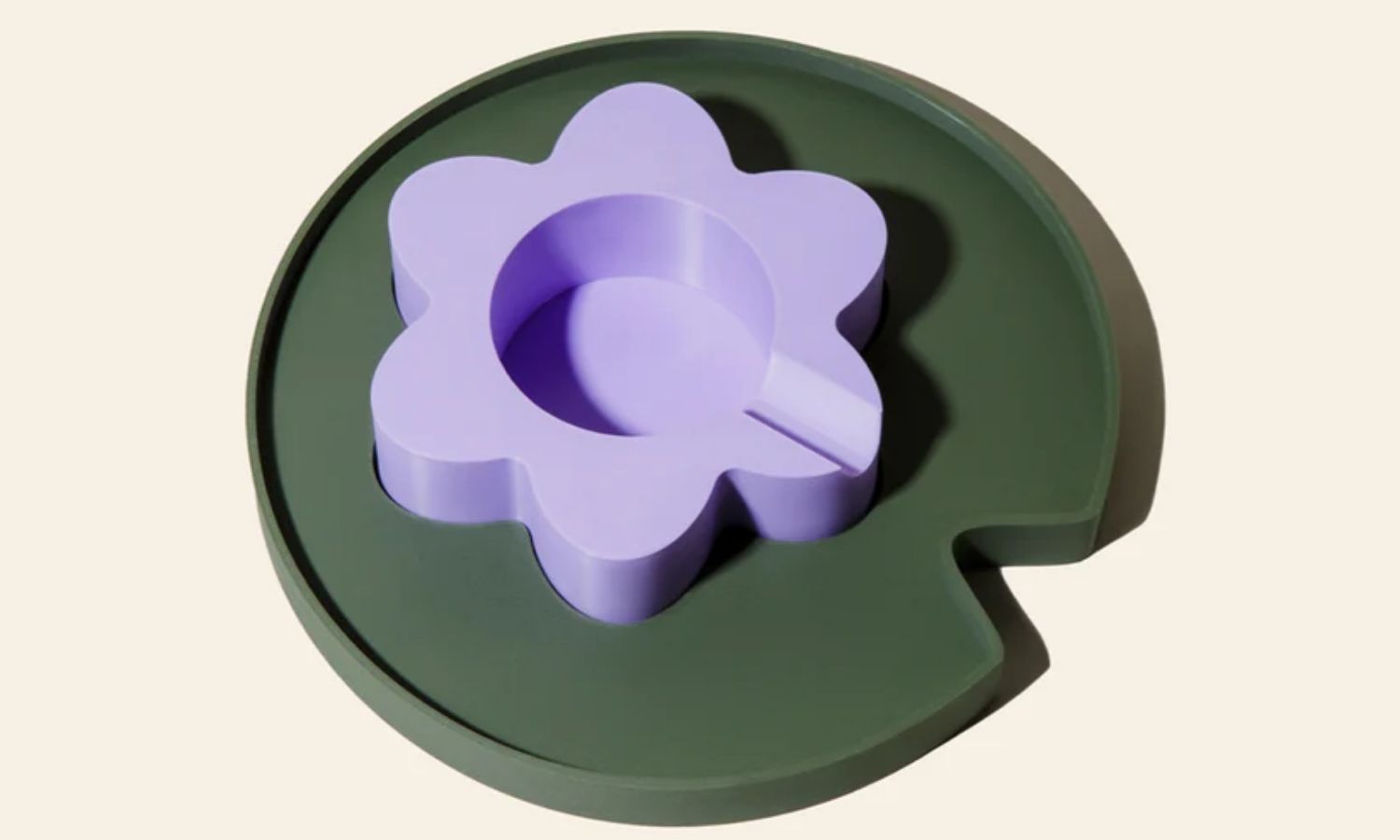
Water Droplet for Hydrific by LIXIL
Hydrific (by LIXIL) required prototypes that were watertight, dimensionally precise, and flexible enough to simulate the behavior of their final product. We worked closely with their creative director to select Durable Resin on our SLA platform — achieving the combination of flexibility, water resistance, and surface quality their testing demanded. Multiple iterations were produced rapidly, allowing the team to validate form, fit, and function before moving to production tooling.
Built in our factory
Brooklyn, NY
How it works
From file to finished part
Upload & quote
Upload your STL, STEP, OBJ, or 3MF file to our instant quoter. Select technology and material — or describe your project requirements and our team will recommend options within one business day.
File review
Every file gets a pre-production review. We check wall thickness, feature resolution, snap-fit clearances, and print orientation — flagging any issues before the build starts.
Production
Parts are produced on our FDM, SLA, or MJF fleet with locked process parameters. For production batches, every unit runs the same settings for consistent dimensions and mechanical properties.
QA inspection
Three-point quality inspection on every order: pre-build file check, in-process dimensional verification, and final visual and dimensional inspection before packing.
Ship
NYC and NJ: next-day local delivery. National: tracked ground or expedited courier. Parts are packed to prevent damage during transit.
FAQ
Frequently asked questions
What tolerances can you hold on small electronic parts?
Our SLA platform holds ±0.2mm across the full build volume (335 × 300 × 200mm), which is tight enough for snap-fit assemblies, button clearances, and PCB mounting features. For FDM, we typically achieve ±0.5mm with optimized orientation.
Can you match injection-molded material properties?
MJF Nylon PA12 delivers 1.7 GPa tensile modulus and 175°C HDT — close to injection-molded PA6. For visual prototypes, our SLA resins replicate ABS and polycarbonate appearance and feel. Standard Resin delivers the best surface finish for visual and client-facing prototypes.
What is your minimum order quantity for production runs?
One part. We handle everything from single prototypes to 5,000+ part production runs. There are no minimum order quantities, setup fees, or tooling costs. Pricing is per-part based on material, technology, and quantity.
What's the cheapest way to prototype an enclosure?
PLA on FDM is the most cost-effective option for form-factor checks and early design reviews. If you need a smoother surface for client presentations, Standard Resin on SLA delivers 2 Ra μm finish at a moderate cost increase. Both ship in 2–3 business days.
How do I get started with your 3D printing service?
Upload your CAD file (STL, STEP, OBJ, or 3MF) to our instant quoter for automated pricing, or fill out our intake form to speak with an engineer about material selection and project planning. We respond within one business day.
Other industries we serve
Medical & Biotech
Precision parts for medical devices, surgical tools, and lab equipment.
Architecture & Design
Presentation models, facade studies, and design prototypes — built at any scale.
Automotive
Functional prototypes, under-hood parts, and interior trim — production-grade.
Aerospace & Defense
Lightweight structures, jigs, and functional prototypes — built to spec.
Robotics & Hardware
Custom mounts, end-effectors, and sensor housings — from prototype to production.
Marketing & Entertainment
Props, installations, and display pieces — at any scale, camera-ready.
Insights
Related reading
Materials
Choosing Materials for 3D Printing: PETG vs ABS
A detailed comparison of PETG and ABS for 3D printing, covering ease of printing, strength, chemical resistance, cost, speed, post-processing, and environmental impact.
Materials
Choosing Materials for 3D Printing: PETG vs PLA
A comprehensive guide comparing PETG and PLA for 3D printing, analyzing strength, durability, chemical resistance, cost, printing speed, and real-world applications.
About
3D Printing Materials 101 - A Lecture in NYU
A comprehensive lecture on 3D printing materials delivered by Makelab CEO Christina Perla at NYU, covering PLA, Standard Resin, Grey Pro, Durable Resin, and Flexible Resin.
Plan Your Project
Tools to plan your build
Check shipping transit times, estimate lead times by technology, and review design guidelines before you upload — so your parts print right the first time.
Check Transit Time
Enter your zip code to see how fast parts arrive from our Brooklyn facility.
Related Resources
Keep exploring
Ready to start your consumer electronics project?
Upload your CAD file and get a quote in minutes — or talk to our engineers about your next production run.