3D printing service for automotive — functional prototypes and production parts.
Automotive applications demand parts that perform under heat, vibration, and mechanical stress. We produce brackets, ducts, interior trim prototypes, jigs, fixtures, and functional test parts in materials engineered for automotive environments — from high-temp resins to carbon-fiber-reinforced polycarbonate.








Challenges we solve
How our 3D printing service supports automotive teams
Heat and chemical resistance for under-hood parts
Under-hood and near-engine components face sustained temperatures of 80–150°C plus exposure to oils, coolants, and brake fluid. Our PC CF (HDT 114°C, chemical resistant) and Nylon PA12 (HDT 175°C) are engineered for these environments. For extreme heat validation, High Temp resin survives 238°C — suitable for heat shield and exhaust proximity testing.
Mechanical performance under vibration and stress
Brackets, clips, and structural components in vehicles experience continuous vibration and cyclic loading. MJF Nylon PA12 delivers excellent fatigue resistance with 53 J/m impact strength and consistent mechanical properties across production batches. PA11 offers higher elongation (80 J/m impact strength) for parts requiring greater ductility under repeated flexing.
Rapid prototyping for vehicle integration testing
Automotive development cycles require physical parts for fit-checks against vehicle bucks, clearance validation in engine bays, and ergonomic evaluation of interior components. Our 3D printing service delivers functional prototypes in 2–5 business days — fast enough to support weekly engineering reviews and gate-review milestones without becoming a schedule bottleneck.
Low-volume production without tooling investment
Pre-series vehicle builds, motorsport programs, aftermarket accessories, and replacement parts for legacy vehicles all require production-quality components in quantities too small to justify injection mold tooling ($30K–$100K per tool). Our 3D printing service produces 1–5,000+ parts per order with no tooling, no MOQs, and no setup fees. Per-part costs decrease with quantity.
Materials
Materials for automotive
For under-hood applications facing temperatures above 100°C, PC CF (HDT 114°C, tensile modulus 8.0 GPa) delivers the highest stiffness and heat resistance in our FDM catalog. ASA offers UV stability and weather resistance for exterior parts and outdoor fixtures (HDT 93°C). MJF Nylon PA12 is the standard for production-grade brackets, clips, and structural components — 1.7 GPa tensile modulus with excellent fatigue resistance and consistent batch properties. For high-temperature validation parts, SLA High Temp resin withstands 238°C, making it suitable for heat shield testing and exhaust system proximity parts.
Nylon PA12
MJF · Shore D 73
Strong, lightweight, chemical resistant. The standard for functional end-use parts. Excellent fatigue resistance and consistent mechanical properties.
Nylon PA11
MJF · Shore D 80
Bio-based nylon with higher elongation and impact resistance. Ideal for parts requiring ductility and flexibility.
Nylon PA12 Glass Filled
MJF · Shore D 82
40% glass-filled nylon. High stiffness and thermal stability for demanding structural applications.
PC CF
FDM · Shore D 83
Polycarbonate carbon fiber. High stiffness and heat resistance for demanding structural applications.
ASA
FDM · Shore D 78
UV and weather resistant. Ideal for outdoor applications and functional parts exposed to sunlight.
ABS-Like Resin
Industrial SLA · Shore D 79
Tough, impact resistant. Good for large functional parts, enclosures, and assemblies.
High Temp
SLA · Shore D 85
HDT 238°C. Molds, tooling, and parts exposed to heat.
Common parts
Parts we produce for automotive
Our work
Automotive projects
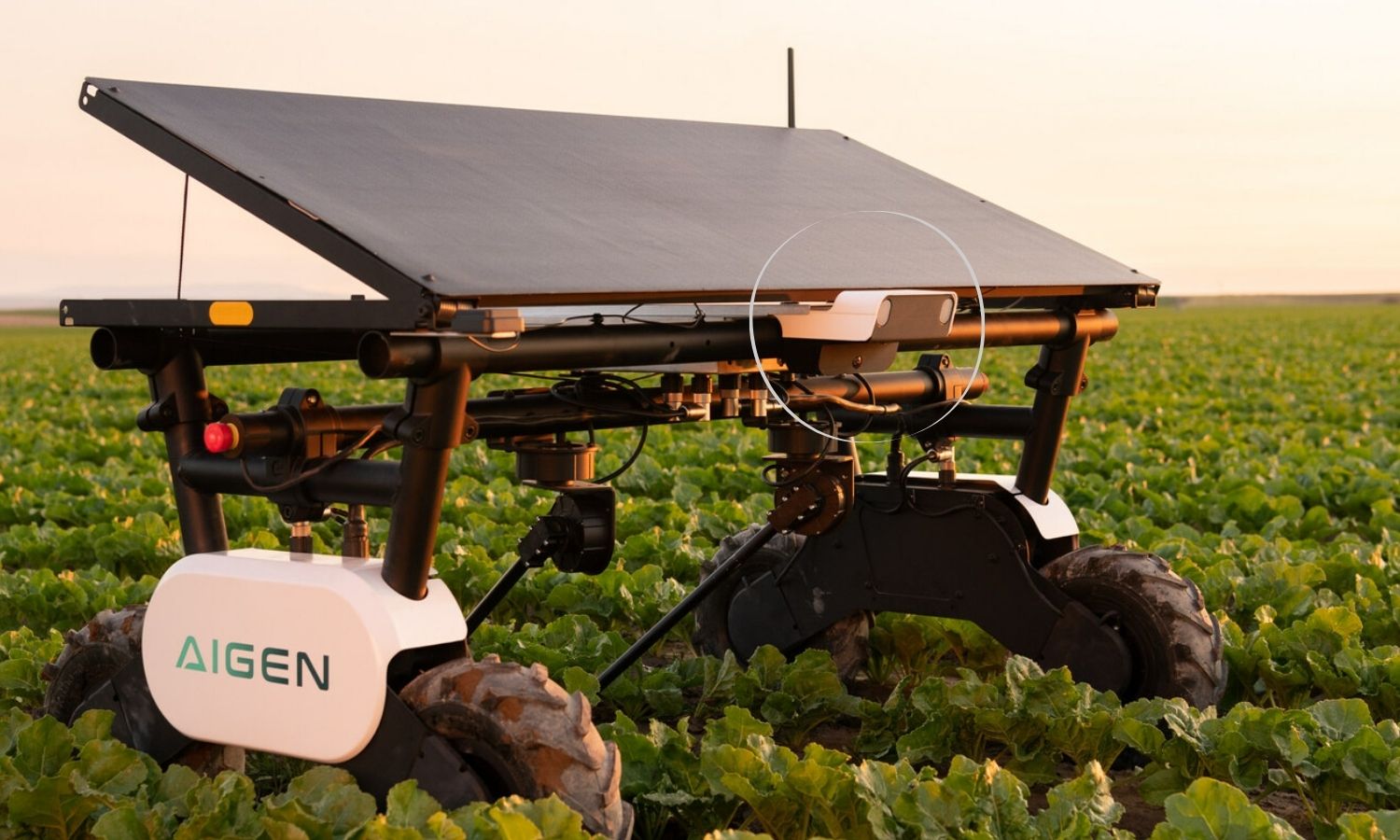

Production for Ag-Tech Sector Leader
This ag-tech client required 1,400+ identical parts with tight dimensional tolerances and consistent mechanical properties across every unit. We used HP Multi Jet Fusion with Nylon PA12 to deliver production-grade components that met spec on strength, surface finish, and dimensional accuracy. Our quality process ensured part-to-part consistency across the entire run, with batch tracking and inspection at every stage.
.jpg)

Gyraline Quad-Point Adapter Production
Gyraline needed a reliable supply of quad-point adapters with consistent dimensional accuracy across every unit. We produced the parts in PETG on our FDM fleet, optimizing print orientation and process parameters for mechanical performance and repeatability. The PETG material provided the chemical resistance and toughness the application demanded, while our production workflow ensured every adapter met the same tolerances and quality standards batch after batch.
Built in our factory
Brooklyn, NY
How it works
From file to finished part
Upload & quote
Submit your STEP or STL files with material and tolerance requirements. For functional parts, include operating temperature range and load specifications so we can recommend the right material.
Engineering review
We review geometry for printability and advise on material selection based on thermal, mechanical, and chemical exposure requirements. Build orientation is optimized for part strength in the primary load direction.
Production
Parts produced on MJF, FDM, or SLA with locked parameters. For production batches, process consistency ensures every part meets the same dimensional and mechanical specification.
QA inspection
Three-point inspection on every order. For production runs, batch tracking and optional SPC (Statistical Process Control) on critical dimensions.
Ship
Tracked shipping nationwide. Expedited and overnight options available for time-critical vehicle build schedules.
FAQ
Frequently asked questions
What materials work for under-hood automotive applications?
PC CF (HDT 114°C, 8.0 GPa tensile modulus), High Temp resin (HDT 238°C), ASA (UV stable, HDT 93°C), and Nylon PA12 (HDT 175°C) all handle elevated automotive temperatures. Material selection depends on your specific temperature range, chemical exposure, and mechanical load requirements.
Can you produce parts that pass automotive testing standards?
Our materials meet published mechanical and thermal specifications from manufacturers like HP (Nylon PA12/PA11), Formlabs (SLA resins), and BASF (FDM filaments). Final validation against your specific automotive test protocols (OEM specs, SAE standards) is the responsibility of your engineering team. We provide material data sheets and can supply test specimens for your lab.
What production volumes can you handle for automotive parts?
We produce 5,000+ parts per week across all technologies. MJF is particularly efficient for automotive production runs of 50–5,000 parts per order. For ongoing programs, we offer blanket order pricing and scheduled deliveries to match your production cadence.
Can you print large automotive components?
Yes. FDM builds up to 360 × 360 × 360mm, Industrial SLA up to 1700 × 800 × 600mm, and FGF up to 2400 × 2400 × 1000mm. For air ducts, dashboard assemblies, and other large components, we recommend Industrial SLA or FGF depending on surface finish requirements.
Do you work with aftermarket and motorsport companies?
Yes. Aftermarket accessories, motorsport components, and limited-edition parts are a natural fit for our 3D printing service — low volumes, fast iteration, no tooling investment. We produce custom brackets, intake components, interior trim, and structural parts for teams that need performance parts without MOQs.
Other industries we serve
Consumer Electronics
From first prototype to shelf-ready parts — built to spec, on time.
Medical & Biotech
Precision parts for medical devices, surgical tools, and lab equipment.
Architecture & Design
Presentation models, facade studies, and design prototypes — built at any scale.
Aerospace & Defense
Lightweight structures, jigs, and functional prototypes — built to spec.
Robotics & Hardware
Custom mounts, end-effectors, and sensor housings — from prototype to production.
Marketing & Entertainment
Props, installations, and display pieces — at any scale, camera-ready.
Insights
Related reading
Materials
Choosing Materials for 3D Printing: PETG vs ABS
A detailed comparison of PETG and ABS for 3D printing, covering ease of printing, strength, chemical resistance, cost, speed, post-processing, and environmental impact.
Design
Practical DfAM Strategies to Help You Save on 3D Printing
Proven Design for Additive Manufacturing strategies to reduce 3D printing costs, including lightweighting, hollowing, orientation optimization, and smart batching.
About
3D Printing Materials 101 - A Lecture in NYU
A comprehensive lecture on 3D printing materials delivered by Makelab CEO Christina Perla at NYU, covering PLA, Standard Resin, Grey Pro, Durable Resin, and Flexible Resin.
Plan Your Project
Tools to plan your build
Check shipping transit times, estimate lead times by technology, and review design guidelines before you upload — so your parts print right the first time.
Check Transit Time
Enter your zip code to see how fast parts arrive from our Brooklyn facility.
Ready to start your automotive project?
Upload your CAD file and get a quote in minutes — or talk to our engineers about your next production run.