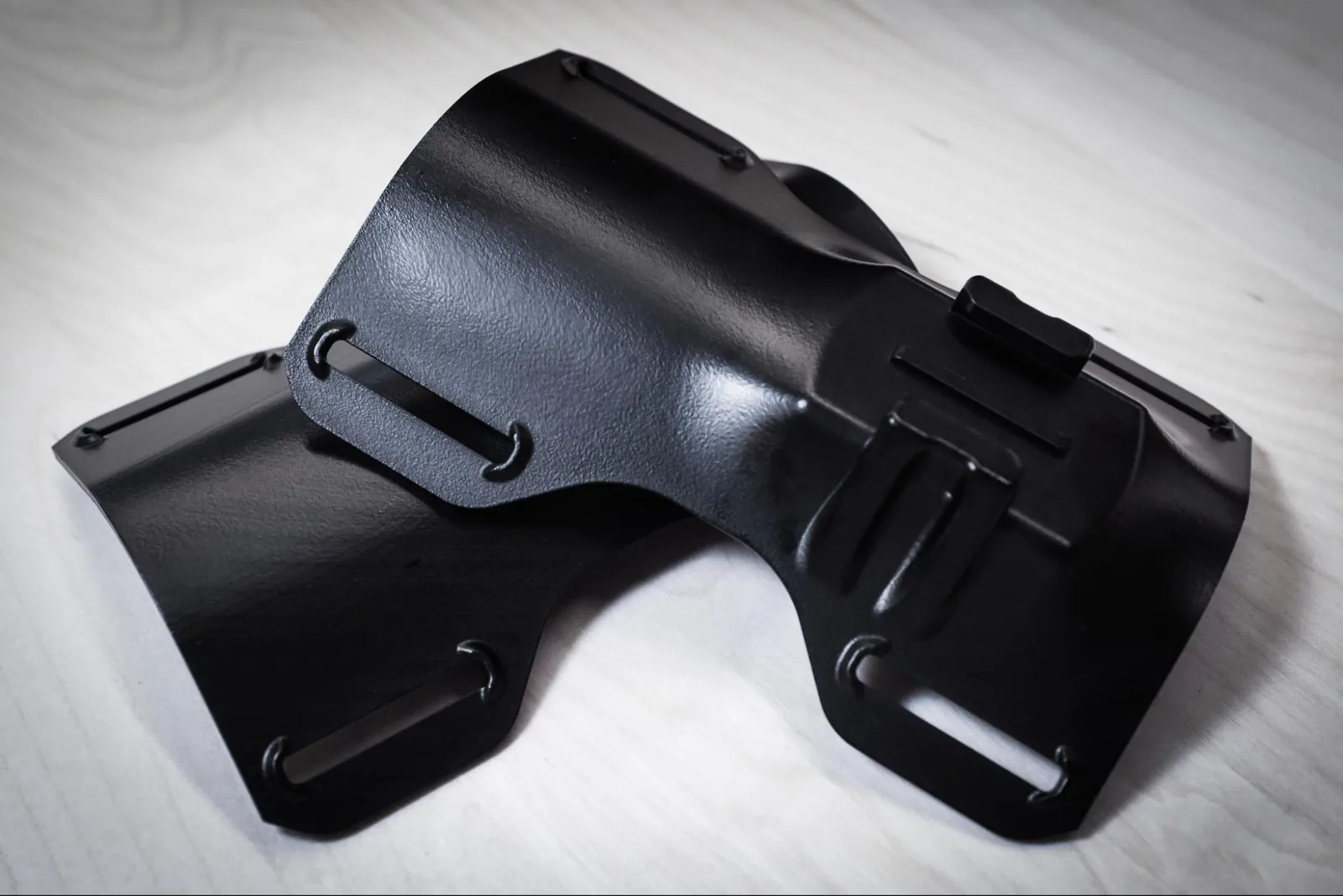
Manufacturing has always been a bit of a black box.
You send your files. You wait for a quote, place the order, and then the information about what happens next lives somewhere inside a system you can't see, and the only way to get to it is to ask someone who isn't always available to answer. Status updates come through account reps managing dozens of clients at once. Getting a simple question answered can mean sending an email in the morning and waiting until the next day. Getting something changed, a shipping address, a delivery date, a quantity, means another email, another wait, another back-and-forth that shouldn't take as long as it does.
Most clients have learned to work around this. They over-communicate at the start of a project to get ahead of questions they shouldn't have to anticipate. They build buffer time into deadlines that don't need it. They follow up more than they want to, because the alternative is not knowing.
It's a quiet tax on every project. And it's one that manufacturing has collected for a long time.
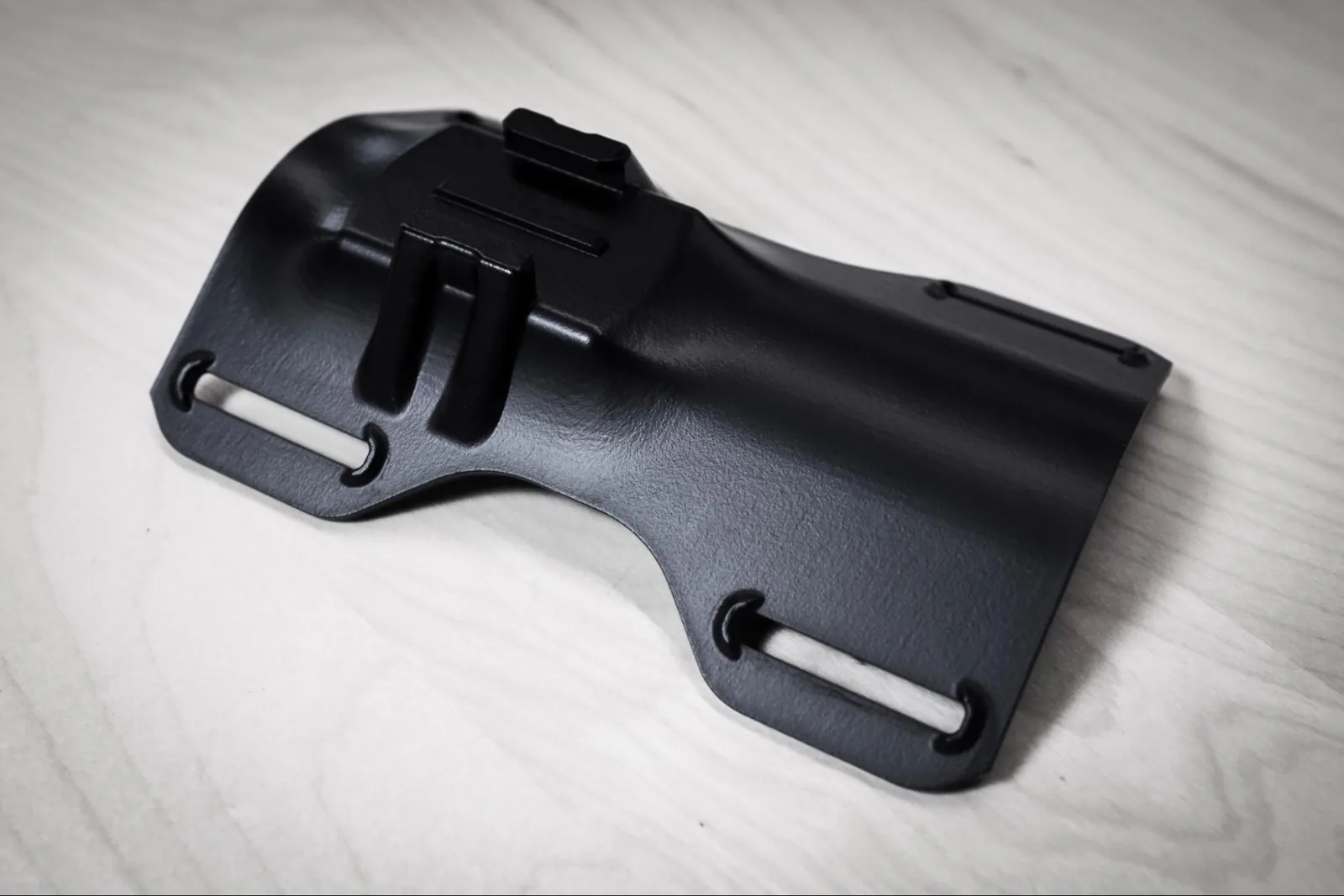
This weekend, Makelab launched a client portal that changes this directly. Here's what it does and what it's built for.
The Problem We Were Solving
Most of the friction that builds up in a manufacturing relationship isn't about the parts. It's about the information around them. Things like what they'll cost, whether they'll print, where they are in production, and when they'll ship. When that information lives entirely inside a manufacturer's internal software, the only way to access it is to ask an account rep who may get back to you once a day. So clients ask. Reps answer when they can. The cycle repeats, and every round-trip takes time that nobody has.
We also know these friction points from the inside. Nine years and tens of thousands of projects have shown us exactly where things slow down, not in edge cases, but consistently, across programs of every size and complexity. The portal was built from those patterns, not from assumptions about what might be useful.
That said, the goal isn't to build a platform that impresses anyone. Think of it the way designers think about good product design: when it's working, you stop noticing it. You're not thinking about the tool, you're thinking about the work. The best version of this portal is one that disappears into the background of a client's actual workflow, present when it matters, unobtrusive when it doesn't. What that requires, in practice, is solving two distinct problems: what happens before the order is placed, and what happens after.
The Instant Quoter
The first part of the platform addresses everything that happens before a price is generated.
The Instant Quoter takes the files clients actually have: STEP, STL, OBJ, 3MF, Rhino .3dm, SolidWorks .sldprt, native files from any major CAD program. Getting started takes an email address. From there, the platform runs DFM analysis at upload, in real time, before anything goes near a machine.
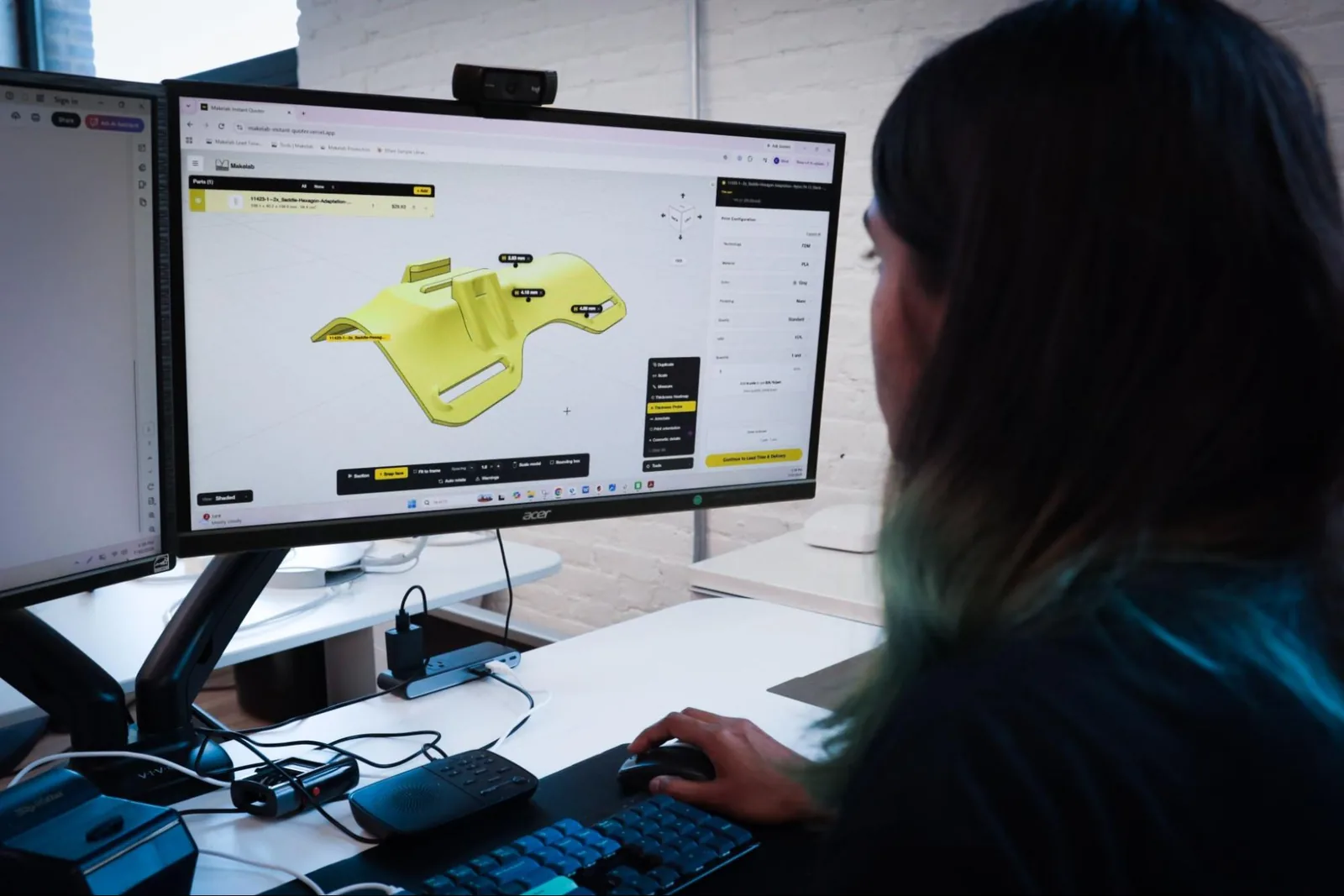
Wall thickness is checked with a heat map. Parts that exceed build volume are caught and flagged. Geometry that creates a manufacturable risk is highlighted with a suggested fix. This is the moment where most quoting tools do nothing. A file is uploaded, a price comes back, and problems surface later, mid-production, when a technician opens the file and finds a wall at 0.4mm that will fail. Those conversations tend to happen after the money has already changed hands, on a timeline that doesn't have room for revisions.
This is the first version of the Instant Quoter. As we get feedback from clients using it, we'll continue building, more tools, more checks, more of what actually helps. The DFM analysis is the starting point, not the ceiling.
Once DFM is clear, the quoter maps the validated part against our full technology matrix: FDM, SLA, MJF, Industrial SLA, FGF, and the new capabilities coming online in the new facility. You see what each process involves, including the trade-offs and benefits, so the decision you make at quote time is an informed one.
Client Portal
The Instant Quoter handles the front of the process. The client portal is what takes over once a job is in production, which is typically the period where visibility drops to near zero.
Sign in and you can see all of your orders in one place: where each one is, what's been completed, what's coming next. Shipping dates are in the system from day one, visible from the start rather than estimated on request. Two days before an order ships, you get a reminder confirming the details (address, contents, timing) so there's no ambiguity at the moment it matters most.
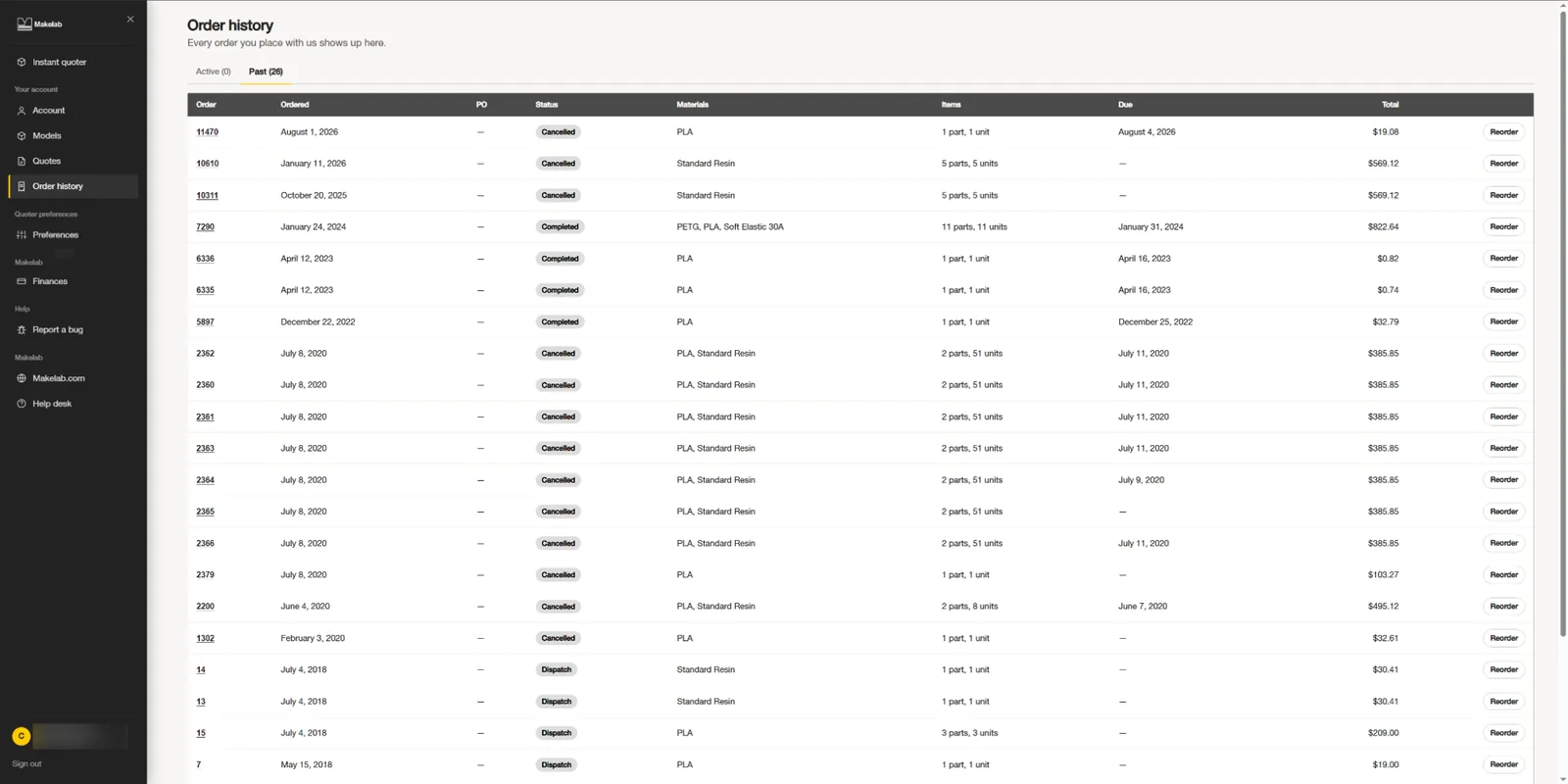
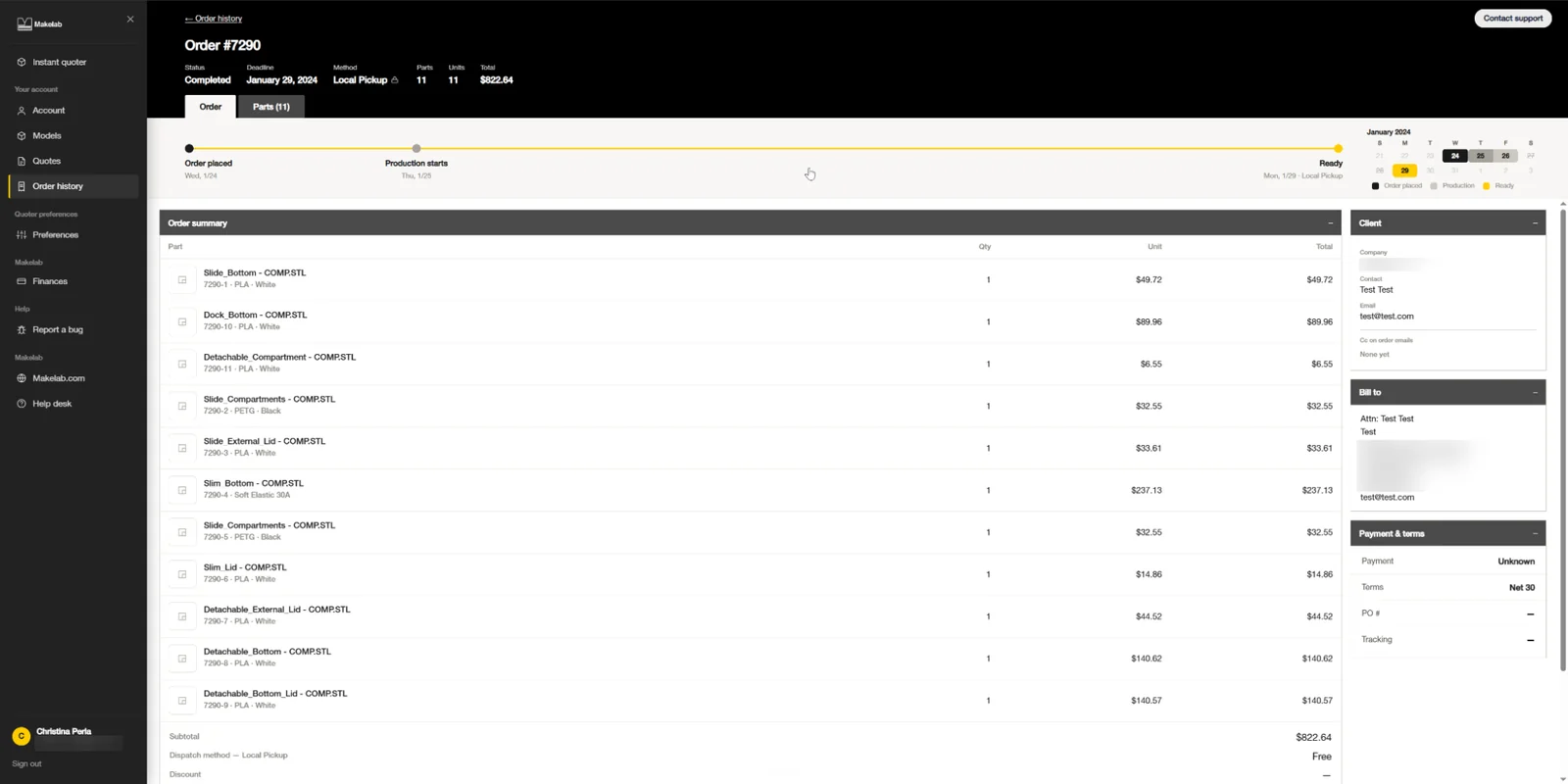
The same information is accessible through the Makelab help center, available directly on the site, for clients who want quick answers without logging in.
When something needs to change, it happens through the portal rather than through email. A change order (an adjustment to quantity, shipping address, or delivery timing) used to mean sending an email, waiting for a response, confirming the details, and waiting again. Start to finish, that cycle could take a few hours on a good day. Through the client portal, the same request takes a few minutes. Credits, refunds, and discount codes are visible and applicable at the order level. The information that used to require a check-in is just there.
Why This Standard
Together, these two parts of the platform are built around the same underlying question: what does a client actually need to feel confident throughout the process, not just at the start?
The answer, in most cases, is less than manufacturers assume. Clients don't need a real-time view of every production step. They don't need constant updates. What they need is to know that their order is on track, that someone will flag something if it isn't, and that they can access the information that's relevant to them without having to ask for it. The emotional weight of managing a manufacturing relationship should be proportional to what manufacturing actually is in the context of their broader project: a solved problem, not an ongoing one.
Christina said it simply in a recent talk on customer experience: "Not effortless to create. Effortless to experience." And: "No news is the best news."
Designers often say that the best design is invisible: when something is working the way it should, you stop noticing it entirely. We think the same is true for manufacturing services. The goal isn't to be the thing a client raves about. It's to be the thing that worked. Quietly, correctly, without becoming a story in the middle of someone else's project.
It's Here
The new facility, the rebuilt backend, the restructured pricing, and now the client portal aren't separate decisions. They're the same decision, made over several years, about what kind of partner we want to be.
One that delivers parts is the baseline. One that makes the experience of getting there predictable, clear, and low-friction is the next level. But manufacturing is inherently unpredictable. Tolerances shift, timelines move, designs change. And the standard we've been building toward is a team that's ready for that: one that anticipates the unknowns, communicates clearly when something comes up, and builds the kind of experience where your questions get answered before you have to ask them.
The portal is live now. makelab.com/quote is where to start.