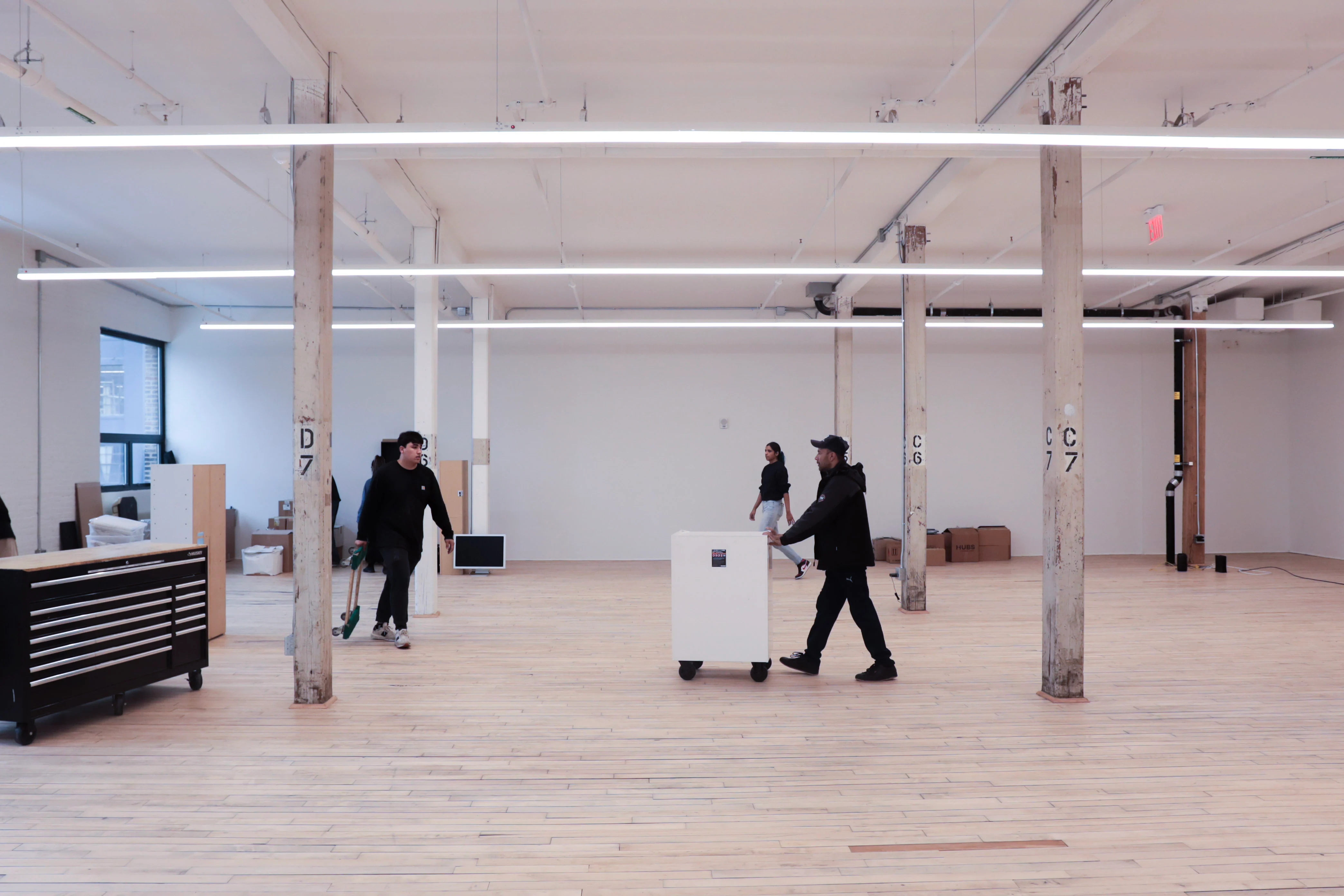
Makelab has moved into a new Brooklyn facility.
The new space is larger and better suited for our electrical and capacity needs, and designed for the kind of work we've been taking on. Over the past few years we've found ourselves running every machine at full capacity and shipping out more and more pallets and crates of parts. The old space stopped making sense. This one makes sense.
But this isn't just a facility change. It's the foundation for everything we've been building toward: more capacity, better workflows, lower prices, and a platform that makes the whole process faster and more transparent from file to finished part.
Why we expanded
Growth is one part of the answer. The more important part is what growth was pointing toward.
We hit a ceiling — not in what we were capable of, but in what the space could physically support. Running machines at full load requires proper electrical infrastructure. Moving high volumes of parts requires room to stage, sort, inspect, and ship without creating bottlenecks. The previous facility wasn't built for where we are now.
The new space gives us room to expand our FDM farm and build toward capabilities we've been planning — including growing our industrial SLA operation to support more material options and larger build volumes. We're also rethinking how we handle packaging, recycling cardboard and paper into our own packaging materials to cut waste and reduce what we buy externally. It's a shift that reflects how we want to operate as we scale.
What changed internally
The facility is new. So is most of what runs underneath it.
We rebuilt our backend software from the ground up. That isn't always visible to customers, but it touches everything: how orders are tracked, how jobs are scheduled, and how issues are caught before they become problems. The old system worked for where we were. It wasn't built for where we're going.
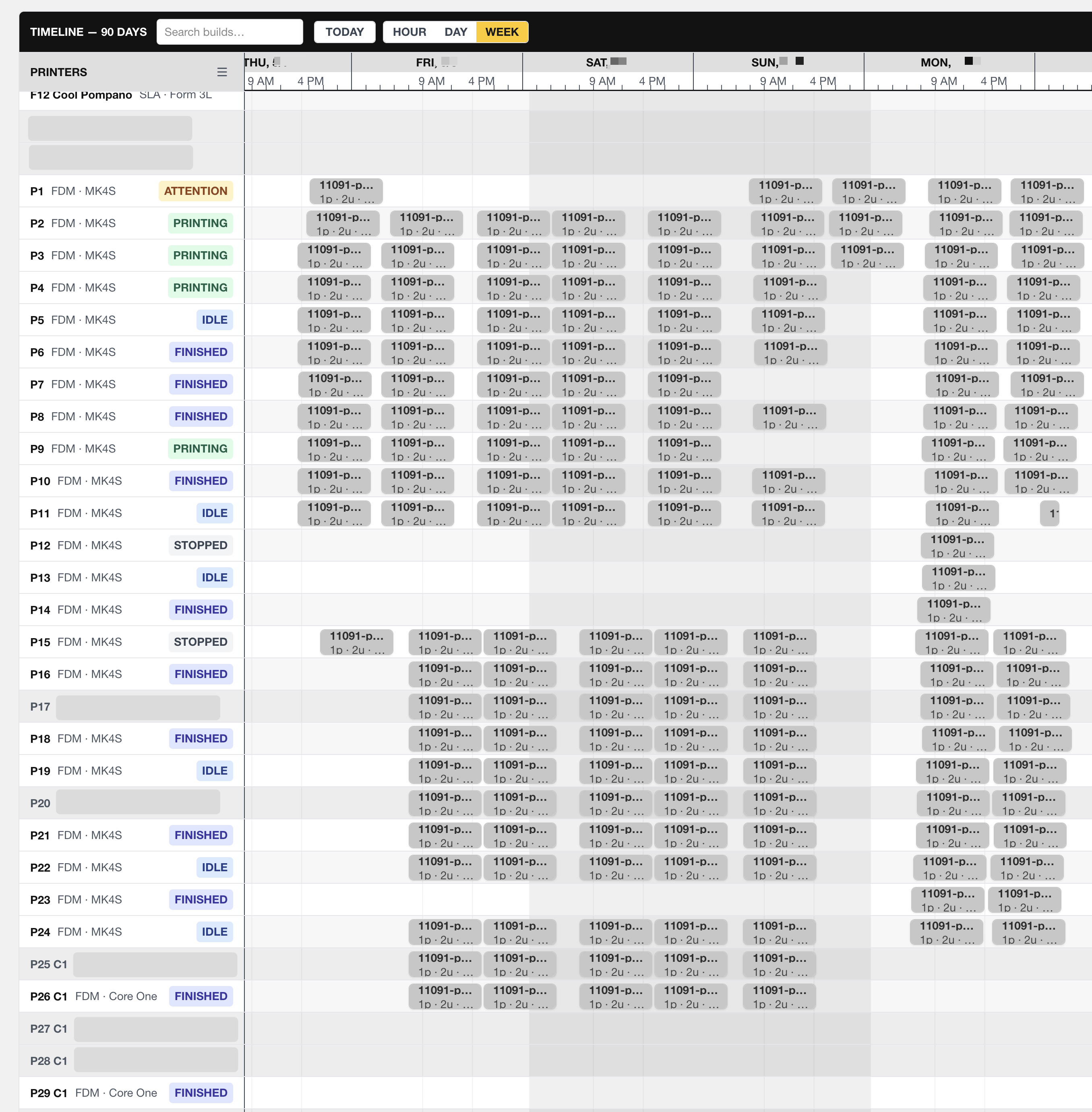
Traceability now runs through the entire process. Every order has a clear record of where it is and what's happened to it. Scheduling is tighter, which means fewer errors from manual coordination and more consistent, predictable lead times. These aren't cosmetic improvements — they're structural, and they're what lets us scale without losing the consistency we've built over nine years.
What this means for customers
The practical outcome is more capacity — up to 5x more production output — and a better ability to support multiple large projects at once. Teams that have run into scheduling conflicts or capacity constraints before will notice the difference.
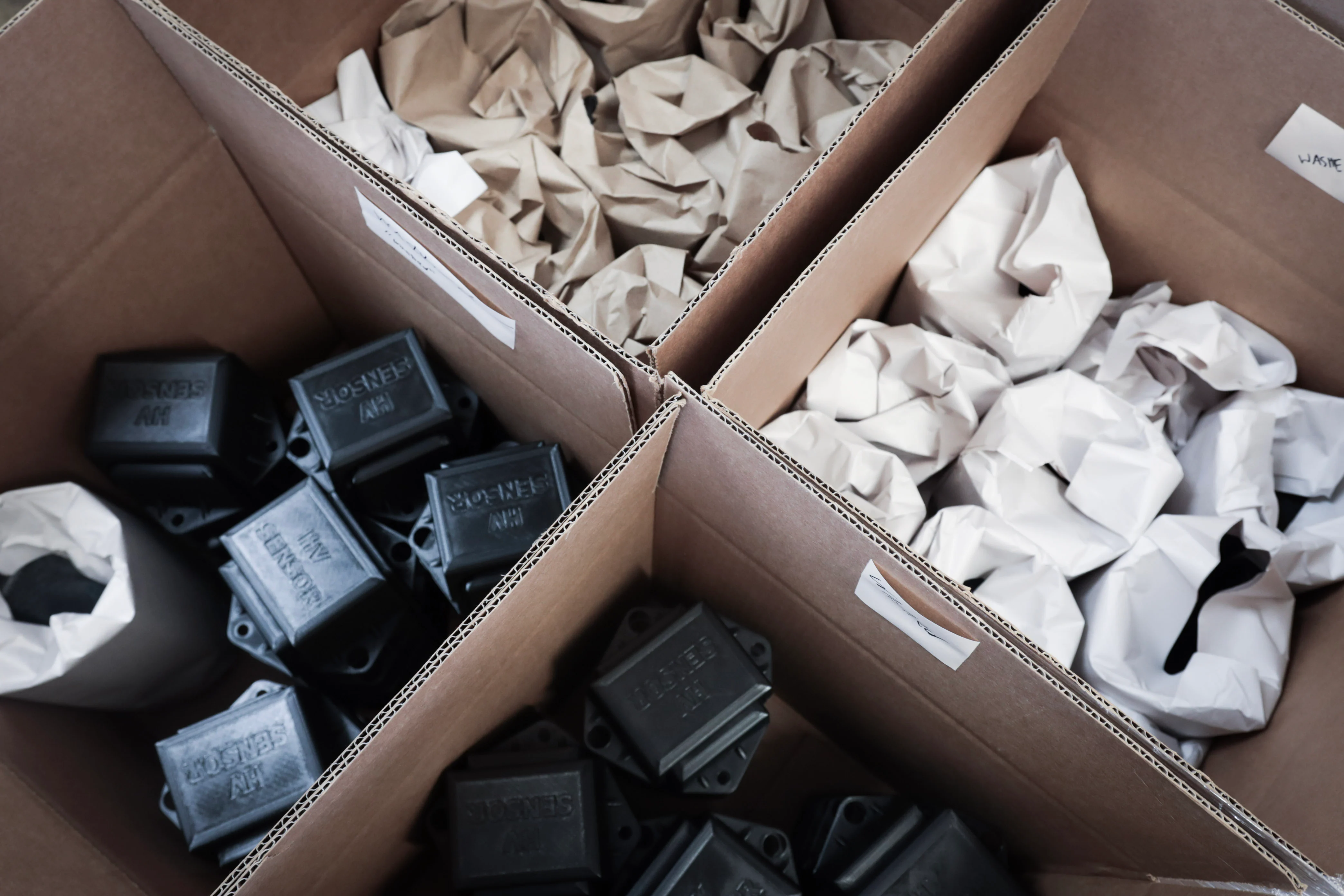
More capacity also means more flexibility. We can take on a wider range of project sizes at the same time without one affecting another, and we can support programs that need to scale quickly.
Beyond capacity, we're working toward more transparency throughout production: better visibility into where an order stands, clearer communication when something needs attention, and eventually measurable quality control with automated machine recognition for part inspection. The goal is to cut the back-and-forth and give you a clearer picture of what's happening and when.
We're also excited to explore new technologies the space makes room for — FGF for pellet-based extrusion of very large objects (4 feet and beyond), powder systems, and more industrial SLA with expanded material options. This facility is the foundation that makes those possible.
Pricing updates
We've lowered pricing across the board, effective now.
We can do this because of reduced overhead and operational costs in the new facility. Running a larger, more efficiently designed space at higher volume brings the cost per part down — and we want that reflected in what you pay.
One specific area we corrected: larger parts. As the size of parts coming through increased, we noticed our pricing formula wasn't calibrated for it. Larger builds were coming in significantly more expensive than they should have been — not because of material or machine time, but because the formula wasn't designed to handle that volume range. We restructured it, added more volume tier breaks and quantity tier breaks, and the result is pricing that more accurately reflects what those parts actually cost to produce.
Across FDM, SLA, MJF, and Industrial SLA, prices dropped anywhere from 20% to 76% depending on part size and volume. The biggest reductions are on larger parts, where the old formula was doing the most damage. If you've quoted with us before and been surprised by the number, it's worth coming back.
Coming in August: instant quoter and order management
The next major step is a platform-level change.
In August 2026 we're launching an Instant Quoter and Order Management system. Upload a CAD file — STL, STEP, 3DM, 3MF, or native files from any major CAD program — and get a quote immediately. Material selection, part geometry, and size all factor in automatically. No waiting on a manual review to get a number. And when we say material selection, we mean everything we currently offer, plus a few new ones we'll introduce at launch.
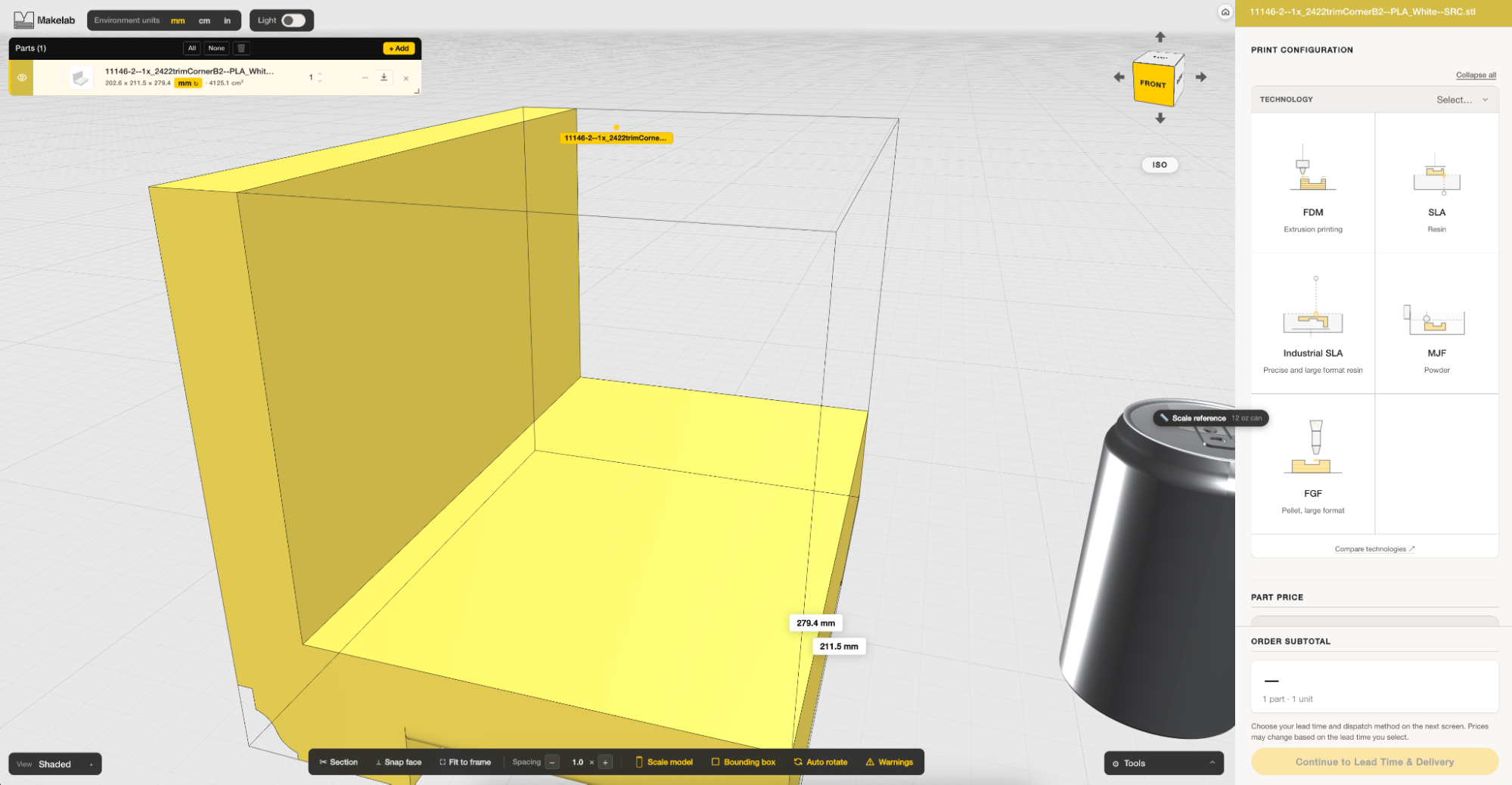
What makes it more than a standard quoting tool is what happens before the quote. The platform includes a built-in CAD preparation environment. In our experience — nine years of it, across tens of thousands of conversations with engineers, designers, and product teams — files rarely arrive perfectly ready to print. Parts need to be separated. Different materials need to be assigned to different components from the same assembly. Scale needs adjusting for a new design iteration. Wall thickness needs checking before anything goes to the machine.
All of that is now doable inside the platform, without leaving to open a separate tool. You can separate parts, assign materials to individual components, adjust scale, and inspect wall thickness with a heat map. Files you prepare are downloadable and ready for print. The goal is to make what's often the most time-consuming part of the process — getting files ready — something that happens in one place, quickly.
This didn't come from guessing at what would be useful. It came from nine years of watching exactly where things slow down across thousands of projects from teams at every stage of development. We built the tool around those patterns.
What's next
We said this was the year of change and improvement. This is us following through — and we're not done.
The new facility, the rebuilt backend, the pricing updates, and the upcoming platform tools are all part of the same goal: helping you move from idea to production faster, with less friction and more clarity at every step. There's more planned, and much more ahead.