From iHome to Dog Toys to OXO
Jake Brosius went from consumer electronics to Bark's toy lab to Smart Design + OXO. His pitch to junior designers: storytelling matters more than CAD.
 Christina Perla
 Jake Brosius
Chapters
The conversation
Jake Brosius doesn't talk about design the way most people in this industry do. In a sector obsessed with software, tooling, and portfolio polish, he keeps returning to one word — instinct. Not the mystical kind. The kind that comes from a decade of shipping consumer products and watching, carefully, what actually lands.
The conversation covers an unusual career shape. Brosius started at iHome, where he designed consumer electronics at the ceiling of a budget-driven category. He moved to Bark — yes, the dog brand — where the users were, in his words, "fifteen-pound customers with zero brand loyalty and extraordinary destructive power." Then to Smart Design, the New York agency behind OXO's Good Grips line, which is as close as industrial design has to a gold-standard credential.
Each move was a deliberate recalibration. iHome taught him to design under cost pressure. Bark taught him to design for users who don't read instructions and don't respect materials. Smart Design taught him that a decade of agency work, done carefully, can still be compressed into a single decision — the decision to take a detail seriously that everyone else has been ignoring.
""The best designers I've worked with didn't have the loudest voice," Brosius says. "They had the clearest story.""
The iHome years
▸ Chapter · consumer electronics at the ceilingWhat makes Brosius' iHome chapter interesting is how specifically he describes the discipline of designing at the low end. Consumer electronics at scale means every millimeter of plastic costs money at volume. The designer's job isn't to express themselves; it's to find the choice that survives cost engineering without losing the thing the user cares about. Brosius is candid that this is harder than designing a hero product — and less glamorous.
He describes the daily work as a kind of negotiation. The engineer wants to remove the chamfer. The factory wants to change the tooling. The merchandiser wants a different color. The industrial designer's job is to hold the line on the two or three details that the product actually depends on — and to let the rest go. The failure mode, he notes, is holding the line on all of them and losing the product entirely.
Brosius left iHome when he'd learned what it could teach him. The move to Bark was, by his own admission, a leap — a category so different from CE that the accumulated muscle didn't obviously transfer. What he found was that the fundamentals did. The users were dogs; the design problem was still about a product that had to survive the most unforgiving edge cases.
What OXO taught him
▸ Chapter · the Smart Design yearsThe OXO stretch of the conversation is, for a design audience, the most quotable. Smart Design built Good Grips around the founder's wife, who had arthritis, and around a dozen rejected prototypes. Brosius is blunt about what most retellings miss: the innovation wasn't the grip. It was the decision to take grip seriously at a moment when the category was optimizing for cost.
He carries that lesson forward — the quiet insistence that the important design choices in a product are the ones that look obvious in retrospect and felt counterintuitive at the time. Brosius spends a few minutes on what it's like to argue for one of those choices in a room where everyone else is optimizing a spreadsheet, and the answer is, you lose more often than you win.
"The important choices look obvious in retrospect and felt counterintuitive at the time."
The Smart Design years were also, in his telling, where he learned the discipline of storytelling. Good design decisions don't sell themselves. A designer who can't articulate why the chamfer matters will watch it get value-engineered out. One who can — who can narrate the decision in a way the room finds compelling — will win the debate often enough to ship a product that feels like something. That skill, Brosius insists, is the one design school most underemphasizes.
The sign-off lands on advice for junior designers, which Brosius delivers with the evenness of someone who's repeated it. Stay curious, ignore rubrics, tell a story. The framework, he notes, isn't his — he stole it from the best mentor he ever had, and he's never found a reason to upgrade it. It's the kind of advice that sounds simple until you realize how few designers, in practice, actually follow it.
By the end of the conversation, what's clear is that Brosius has built his career around a small number of convictions that he's been stress-testing for a decade. They've survived iHome, Bark, and Smart Design. They'll presumably survive whatever comes next. The rest of us, listening, get to borrow them.
More episodes
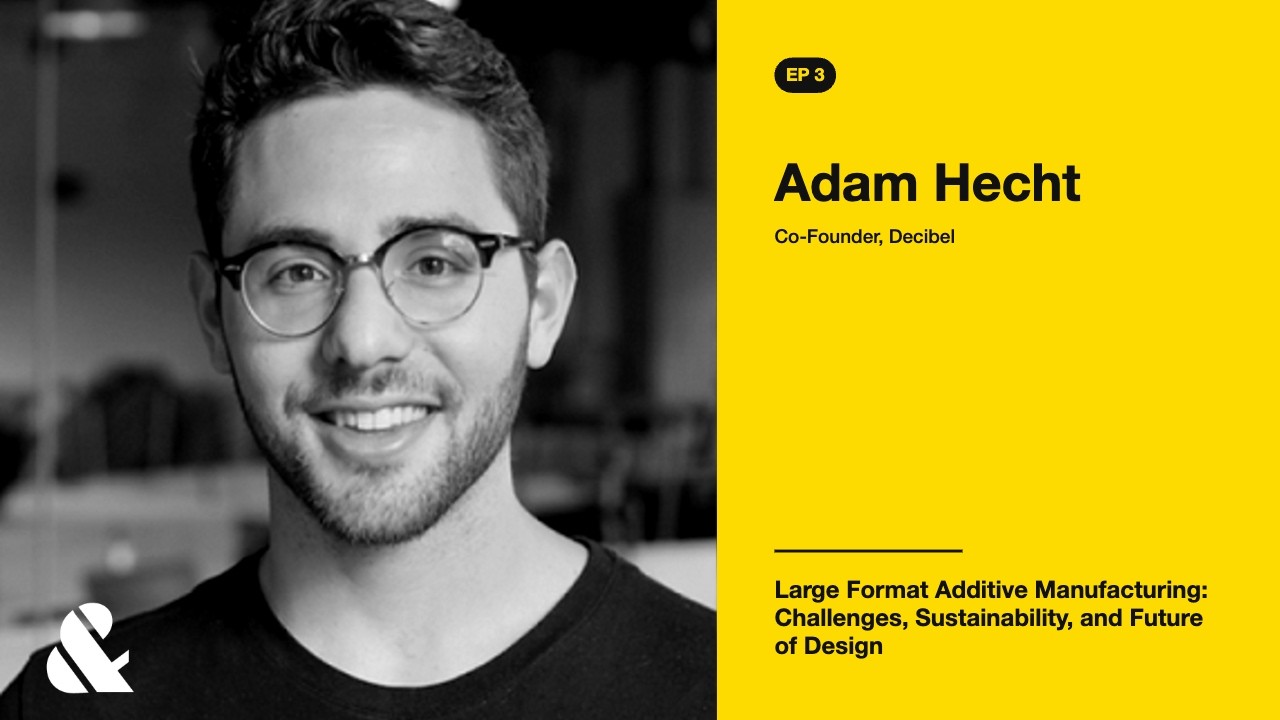 S2 · EP 03
Large Format Additive Manufacturing: Challenges, Sustainability, and Future of Design
 S2 · EP 02
AI in Engineering: Challenges, Innovations, and the Future of Manufacturing
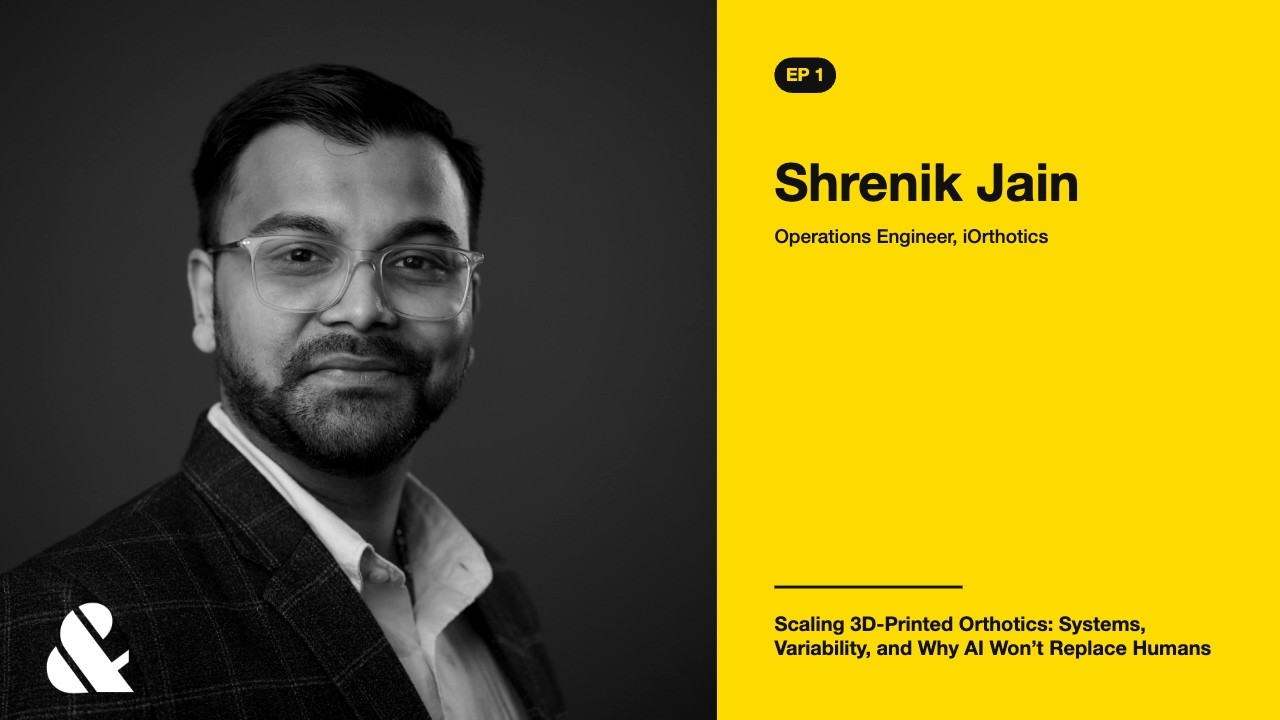 S2 · EP 01