A Designer's Case for Staying Curious
Anson Cheung has designed across consumer electronics, fitness, and EVs. His philosophy: stay curious, mentor others, never stop sketching.
 Christina Perla
 Anson Cheung
Chapters
The conversation
Anson Cheung has been an industrial designer long enough to have shipped in categories most designers cycle through once or twice: consumer electronics, fitness, electric vehicles. What makes the conversation with Perla interesting isn't the breadth. It's the specific philosophy Cheung has built up across those transitions — a worldview where curiosity is a career strategy, not a personality trait.
Cheung describes the moves between industries as deliberate, not accidental. Each jump was triggered by the same question: which category is about to reward rigorous design work that the category doesn't quite know it needs yet? Consumer electronics wanted better haptics. Fitness wanted products that didn't feel like punishment. EVs wanted interiors that treated drivers like adults. Cheung showed up early for each.
He's frank about the risk of this strategy. You can be early in a category that never matures. You can leave before a product you helped ship actually pays off. The timing question is harder than the domain question, and Cheung has gotten it wrong at least twice — once by staying too long, once by leaving too early. He names both without evasion.
"The designer's job, Cheung argues, is to stay one industry ahead of where the hiring market is."
What each category taught
▸ Chapter · CE, fitness, EVsThe conversation is rich with specifics about what each category taught him. From consumer electronics: humility about manufacturability. From fitness: respect for the user's time and attention. From EVs: the scale of interior design when a cabin is a ten-year object rather than a three-year one. Cheung doesn't frame these as transferable skills — he frames them as lenses you pick up and keep.
The CE years, in his telling, were about cost engineering and the willingness to fight for the right millimeter. The fitness chapter taught him to design for the state of mind the user arrives in — rushed, distracted, not at their best. The EV work taught him what it means to design a product the customer will live inside for years, where every decision compounds.
What Cheung emphasizes is that none of these lessons are translatable by analogy. You learn CE by doing CE, fitness by doing fitness, EVs by doing EVs. The designer who's done all three isn't a generalist — they're someone who's accumulated three specific vocabularies. The goal isn't fluency in all categories. It's the ability to recognize, in a new brief, which vocabulary applies.
Mentorship as discipline
▸ Chapter · the next generationThe middle of the conversation turns to mentorship, which Cheung treats as a core part of the job rather than a side project. He runs reviews for junior designers on his own time, not because he's magnanimous but because he believes it's the only way to keep the craft alive across a generation that learned design mostly from YouTube.
His critique of the current pipeline is pointed. Design programs turn out students who can render but can't manufacture, who have portfolios but not shipped products, who have taste but not the judgment to deploy it. Mentorship, for him, is filling that gap. The juniors he mentors are the ones he'd eventually want to hire — not because he's building a pipeline, but because it's the only way to find designers who are actually good.
""Sketch daily, ship yearly, stay curious or quit.""
He's specific about what he teaches. Not software. Not tooling. The thing he drills is judgment — the ability to look at a rendering and say which detail is the one that matters. That's the skill that doesn't come from YouTube, and it's the skill that separates senior designers from senior-looking ones. Cheung spends his Saturday mornings teaching it.
The sign-off is characteristic. Cheung's advice to a junior designer today is as direct as anything in the episode: sketch daily, ship yearly, stay curious or quit. If that sounds like a bumper sticker, he notes, it's only because it's been true for three decades and he has yet to find a counterexample. What makes the advice worth hearing is that the man delivering it has, in fact, lived it.
More episodes
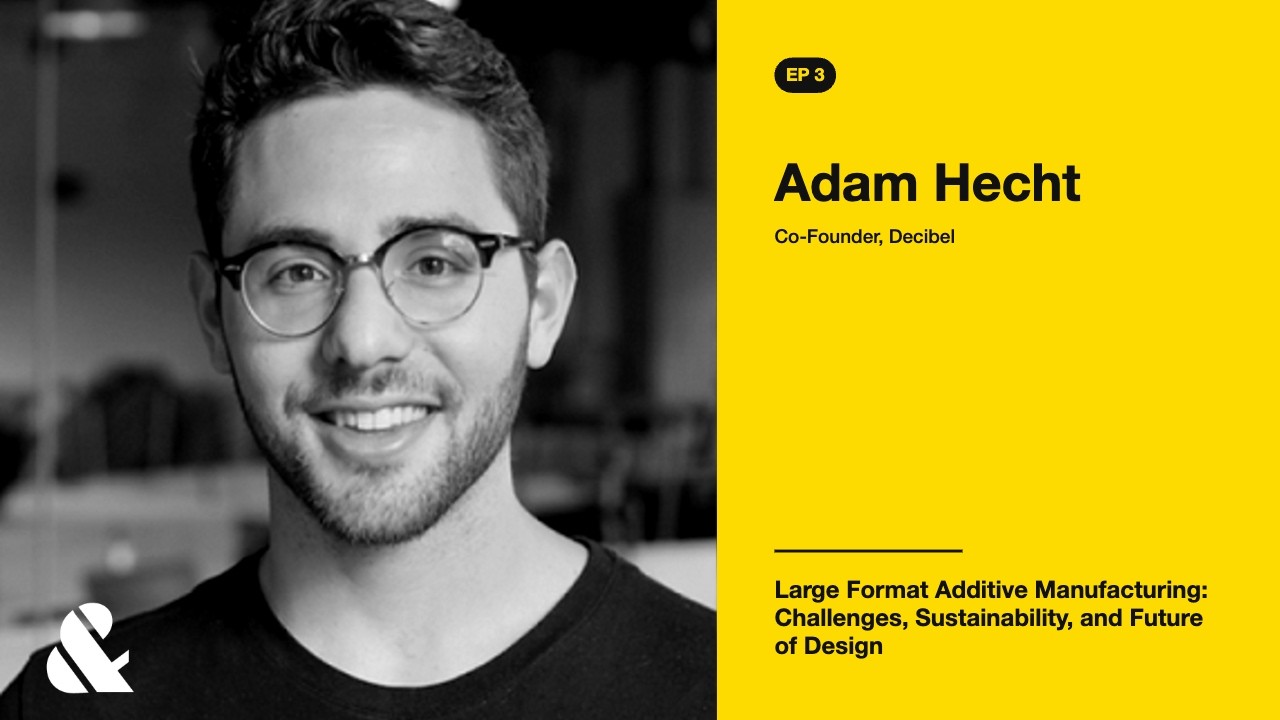 S2 · EP 03
Large Format Additive Manufacturing: Challenges, Sustainability, and Future of Design
 S2 · EP 02
AI in Engineering: Challenges, Innovations, and the Future of Manufacturing
 S2 · EP 01