Rewriting Hardware's Supply Chain
Rich Mokuolu left mechanical engineering to rebuild how startups source parts. Partsimony is his answer to the chaos.
 Christina Perla
 Rich Mokuolu
Chapters
The conversation
Rich Mokuolu built Partsimony because he'd watched too many promising hardware startups die the same way — not from a product failure, not from a market failure, but from a supplier quote that came back wrong, a manufacturing run that shipped late, a bill of materials that priced them out of the category they'd already validated.
Hayes comes at the problem from mechanical engineering, which gives the conversation its character. He doesn't talk about supply chain the way a software person talks about it — as a workflow to be digitized. He talks about it the way a machinist talks about fit tolerances. A real physical network of people and machines, with slack and failure modes, that most founders meet only after they've already made an irreversible decision.
The early part of the conversation is a kind of reality check. Most hardware founders assume that sourcing is just a slower version of software procurement — you pick a vendor, you send a spec, you get a thing. Hayes walks through why that framing breaks immediately. A contract manufacturer is a negotiated partnership, not a transaction. And the negotiation is with a partner whose other customers matter more than you do.
""Supply chain isn't a tab in your project management tool," Hayes says. "It's the company. Everything else is commentary.""
The matching problem
▸ Chapter · finding the right factoryPartsimony's pitch is that sourcing the right manufacturer for a given hardware product is a discoverability problem as much as a quality problem. Most founders are working with the three suppliers they met last time or the five that showed up on Alibaba. Hayes has built infrastructure to match a bill of materials to the contractor who's genuinely best for it — matched by capability, not just by price.
He walks through the typical failure modes. The factory that can make your prototype but not your production run. The supplier whose quote is half of everyone else's because they didn't read the spec. The contract manufacturer who ghosts you for the holiday. Partsimony, as he describes it, is built around identifying these patterns before a founder discovers them the hard way.
What makes the model work, Hayes argues, is the data. Every engagement teaches Partsimony something about a supplier's real capabilities versus their stated ones. Over time, that data compounds into something a first-time founder could never accumulate on their own — the kind of ground truth that used to live in the heads of twenty-year supply chain veterans and nowhere else.
The post-pandemic re-wiring
▸ Chapter · resilience as a line itemThe conversation lingers on how the pandemic changed hardware founders' risk tolerance for supply chain. Hayes describes clients who used to offshore everything and now insist on a domestic backup for every critical part. He's matter-of-fact that this is expensive and inefficient — and unavoidable for any founder who's been through a two-year port delay.
He's specific about what the new playbook looks like. Dual-source every part on the critical path. Qualify a backup supplier before you need one. Build tooling that can be replicated, not just located. Pay a small penalty in unit cost for the optionality it buys you. Every one of these is a trade-off Hayes has seen founders make the wrong way, and he's unsentimental about the right way.
"Dual-source every part on the critical path. The founders who learned this the hard way are the ones writing the checks now."
Toward the end, Perla asks the question any Makelab client would ask: where does 3D printing fit in this world? Hayes' answer is pragmatic — it fits for bridge production, for parts that can't economically be molded, and for the prototype-to-pilot phase where changes are still frequent. Beyond that, it's one tool among many, and the Partsimony model is to pick the right one rather than the loudest one.
What's clear from the whole conversation is that Hayes isn't selling optimism. He's selling realism — the acknowledgment that hardware is hard, that sourcing is the hardest part of hardware, and that most of what founders believe about manufacturing is informed by a version of reality that no longer exists. Partsimony, in that frame, isn't a convenience. It's an insurance policy against the version of failure most founders don't see coming.
More episodes
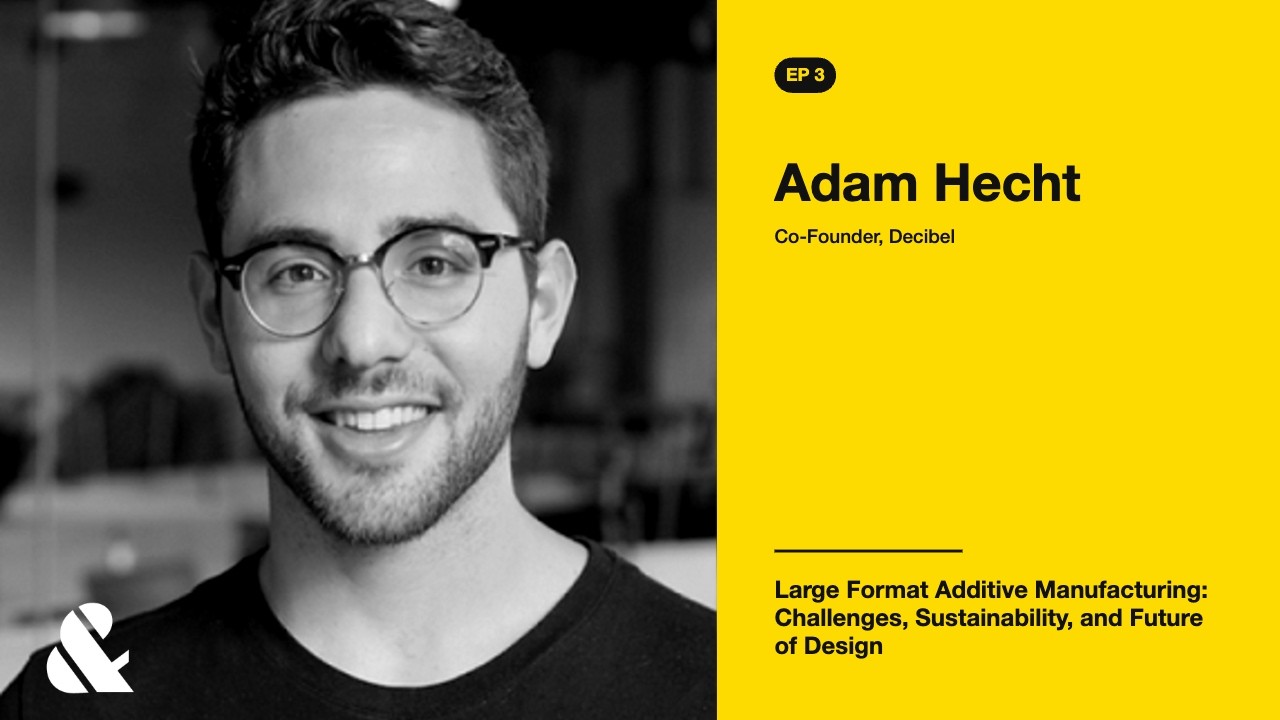 S2 · EP 03
Large Format Additive Manufacturing: Challenges, Sustainability, and Future of Design
 S2 · EP 02
AI in Engineering: Challenges, Innovations, and the Future of Manufacturing
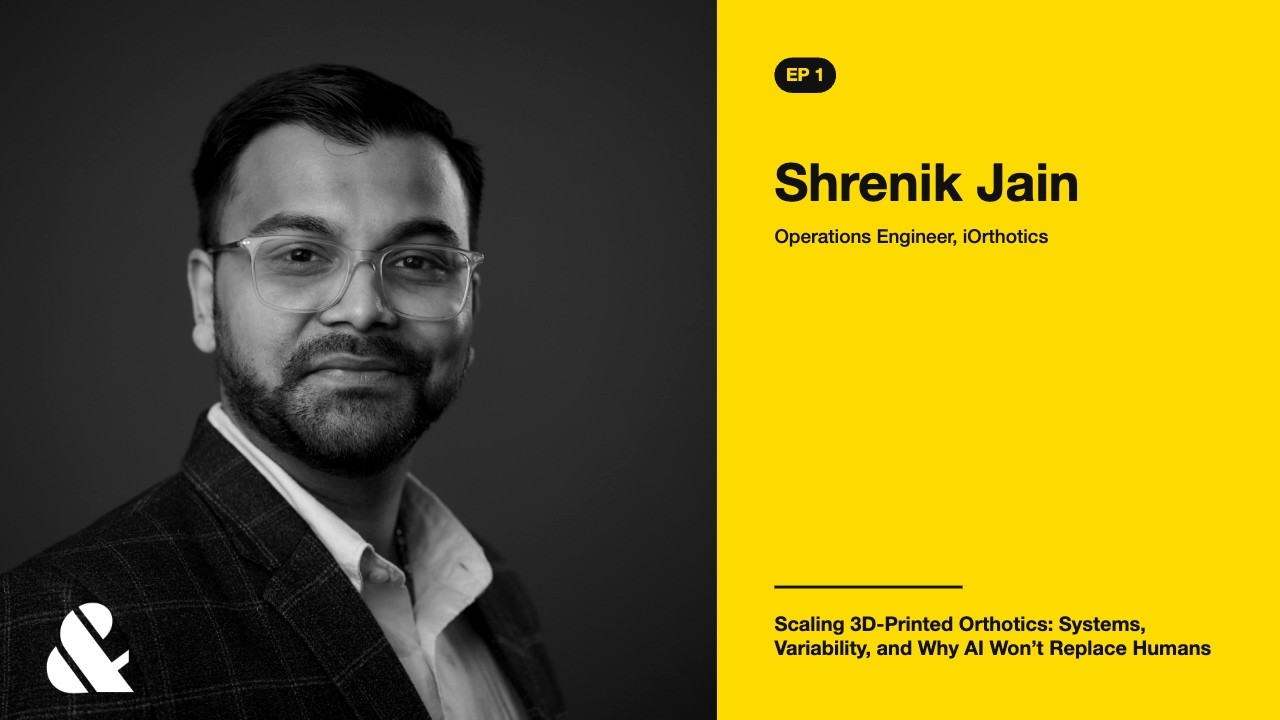 S2 · EP 01