How Hydrific Prototyped a Smart Water Sensor
Emilie Williams co-founded Hydrific to stop wasted water. The story behind the sensor — and why rapid printing was non-negotiable.
 Christina Perla
Chapters
The conversation
Emilie Williams co-founded Hydrific — a LIXIL-incubated startup — the global plumbing and fittings company behind Grohe, American Standard, and Inax — on a hypothesis that's deceptively simple: nobody's going to fix residential water waste with a nudge. They're going to fix it with a sensor.
Hydrific's first product is a device that clips onto a home's water line and tells homeowners what's actually happening in their plumbing — leaks, unusual use, the drip nobody has found yet. It ships with an app. It talks to smart-home systems. But the thing that matters, Williams insists, is the sensor itself, and the signal-processing work behind it.
Williams is refreshingly direct about why the product wasn't built by a pure-play startup. The sensor itself is easy; the integration with existing plumbing hardware, the regulatory work, the global supply chain — those are things you only get to skip if you start inside a company like LIXIL. Hydrific has LIXIL's credibility with the trades and retailers, which is worth years of market entry.
""The hard part wasn't the electronics," she says. "It was everything downstream of the electronics.""
Rapid printing, serious consequences
▸ Chapter · the prototype loopA specific stretch of the conversation is about the prototyping work. Williams' team iterated the sensor's housing dozens of times — fit, field test, fail, print again. In her telling, rapid 3D printing wasn't a convenience, it was a requirement. Injection molding would have killed the development cadence. The product shipped because the prototyping loop was faster than the engineering loop.
Perla, who runs the printing floor Hydrific used, is visibly interested in the operational details. Williams walks through what she learned about working with service bureaus, which materials translated to production, and where the team got burned by choosing a technology that looked right in print but wouldn't survive the test lab.
The specific lesson she names: test the housing in actual plumbing, not a lab sink. A prototype that passes pressure testing on the bench will still fail if the real-world mounting geometry is off by a millimeter. Her team found this out the hard way, twice, before building a test rig that matched the field conditions. After that, the iteration speed tripled.
Startup inside a giant
▸ Chapter · corporate incubationThe conversation Perla has with Williams is a masterclass in how a corporate-incubated startup actually runs. There's a tension between moving fast and respecting the parent company's scale — and Williams is candid about the trade-off: LIXIL's brand gets you trust with plumbers and retailers that a pure startup couldn't buy. The cost is that you have to operate inside a company whose default speed is slower than a startup's.
She's specific about what worked. Hydrific runs as a separate team, with its own hiring, its own office, its own decision-making. What it borrows from LIXIL is the brand, the channel, and the manufacturing relationships. What it protects from LIXIL is the speed, the culture, and the willingness to kill a feature that's not working. Most corporate-incubated startups fail because they don't draw that line hard enough. Hydrific drew it.
"Use the brand, use the channel, use the supply chain. Or don't bother."
Near the close, Williams is asked what advice she'd give a founder considering corporate incubation. The answer surprises: it's worth it only if you actually use the parent company's scale. If you're running your startup like an independent with a safety net, you've taken the worst of both worlds. Use the brand, use the channel, use the supply chain — or don't bother.
The conversation ends with Williams describing the thing that keeps her motivated — the homeowners who've sent in photos of the leaks Hydrific found before anyone else did. The product, in that framing, isn't a gadget. It's a quiet catastrophe-prevention device that sits on a water line and earns its keep one avoided flood at a time. That's a narrow market, she admits, but a deep one.
More episodes
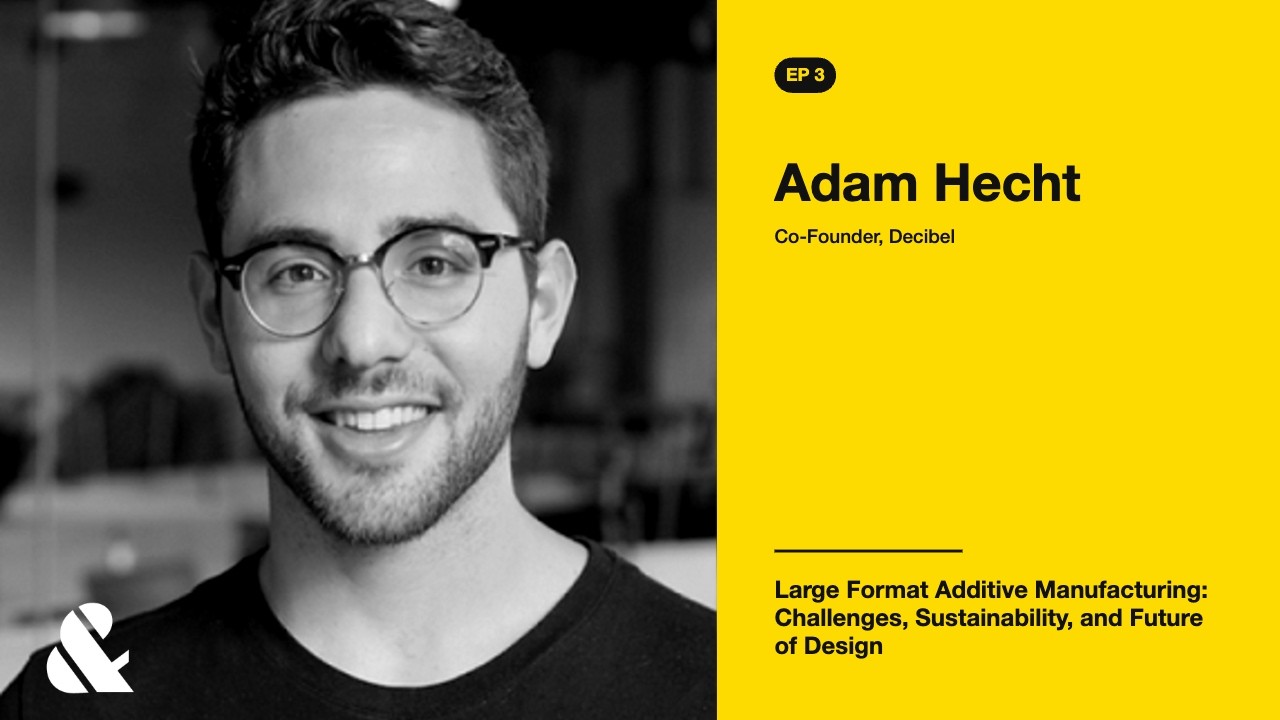 S2 · EP 03
Large Format Additive Manufacturing: Challenges, Sustainability, and Future of Design
 S2 · EP 02
AI in Engineering: Challenges, Innovations, and the Future of Manufacturing
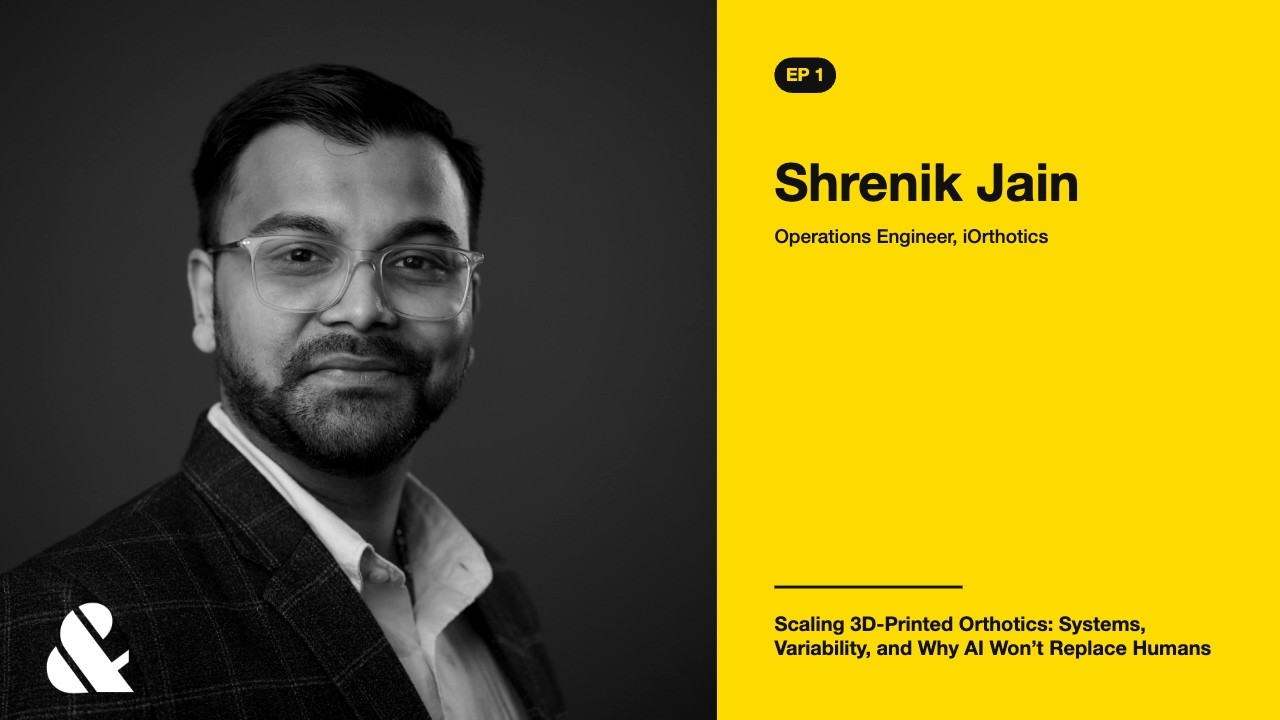 S2 · EP 01