From Toy Design to the AI Frontier
Katie Lim has designed everything from plush toys to AI hardware. Why ID skills are more relevant than ever.
 Christina Perla
 Katie Lim
Chapters
The conversation
Katie Lim's career is a map of industrial design's last twenty years: plush toys, consumer electronics, smart-home hardware, and now AI devices. Talking to her is like getting a tour through every place the discipline has touched — and a theory about where it's about to go.
Lim is patient with the backstory because the backstory matters. She started in toy design when toys were still primarily mechanical objects, and she moved into connected hardware when "smart" was a dirty word applied to half-broken products. The move from there to AI, for her, was less a pivot than a continuation — a new substrate but the same job: give people objects that behave the way they expect.
She lays out what each transition taught her. Toys taught durability and the emotional weight of an object in a child's hand. Consumer electronics taught cost engineering. Connected hardware taught what happens when your product is only as good as its firmware update pipeline. AI, she notes dryly, seems to be teaching the industry a version of that same lesson all over again.
"The fundamentals of industrial design, Lim argues, haven't changed. The surface has."
AI tools in the working studio
▸ Chapter · the new toolkitWhere the conversation gets interesting is on what AI tools actually change for working designers. Lim is neither a skeptic nor a true believer. She uses generative tools for ideation, dismisses most of the output, and credits the remaining 5% with shortening her concept phase by weeks. She's specific about which tools earn their place in her workflow and which don't.
The honest take she offers is that the tools are good at quantity and bad at judgment. They produce a thousand options in the time it would take her to sketch twelve. The value isn't the thousand — it's that once in a while, one of the options contains an idea she wouldn't have had on her own. That's the 5%, and it's enough to justify the workflow.
She's careful, though, about what this doesn't replace. The work of deciding which idea is good, of translating it into a product that can be manufactured, of defending it through a development cycle — none of that gets easier with AI tools. If anything, the cheapness of generation makes the judgment part harder, because there's more material to sort through.
The discipline, not the software
▸ Chapter · what staysLim is firm that industrial design as a discipline is more relevant, not less, in an AI era — the argument being that someone still has to make the decisions about what a thing should be. The rendering tool will produce a thousand options; the designer's job is to know which one is good. That kind of judgment isn't automatable, and Lim sees no sign it's about to be.
She's specific about where she thinks younger designers are getting the ratio wrong. Too much tool fluency, too little product exposure. You can learn Blender on YouTube. You can't learn, on YouTube, what a product is supposed to feel like. That comes from holding products — good and bad — in enough quantity to develop a nervous-system response. And that, she notes, takes years.
"You can learn Blender on YouTube. You can't learn, on YouTube, what a product is supposed to feel like."
The career advice she gives junior designers is specific: learn one domain deeply. Pick toys, pick medical, pick wearables — but go deep enough that you know the real constraints, not just the aesthetic ones. Generalists don't have a bad career; they just have a harder one to sell.
By the end, it's clear that the thing Lim respects most isn't the tool or the trend, it's the designer who's still sketching in a notebook because that's where the best ideas still start. The plush toys, the smart speakers, the AI device prototypes on her desk — they all have the same origin. The substrate changes. The work, in her hands, doesn't.
More episodes
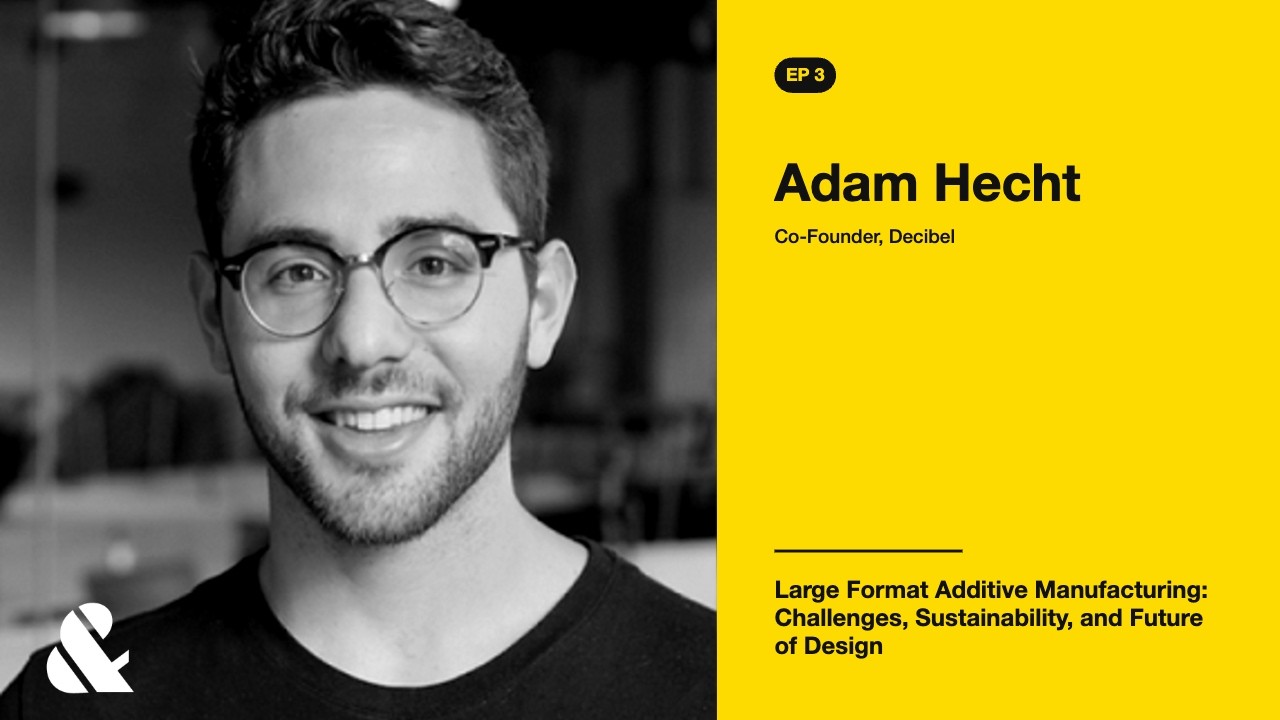 S2 · EP 03
Large Format Additive Manufacturing: Challenges, Sustainability, and Future of Design
 S2 · EP 02
AI in Engineering: Challenges, Innovations, and the Future of Manufacturing
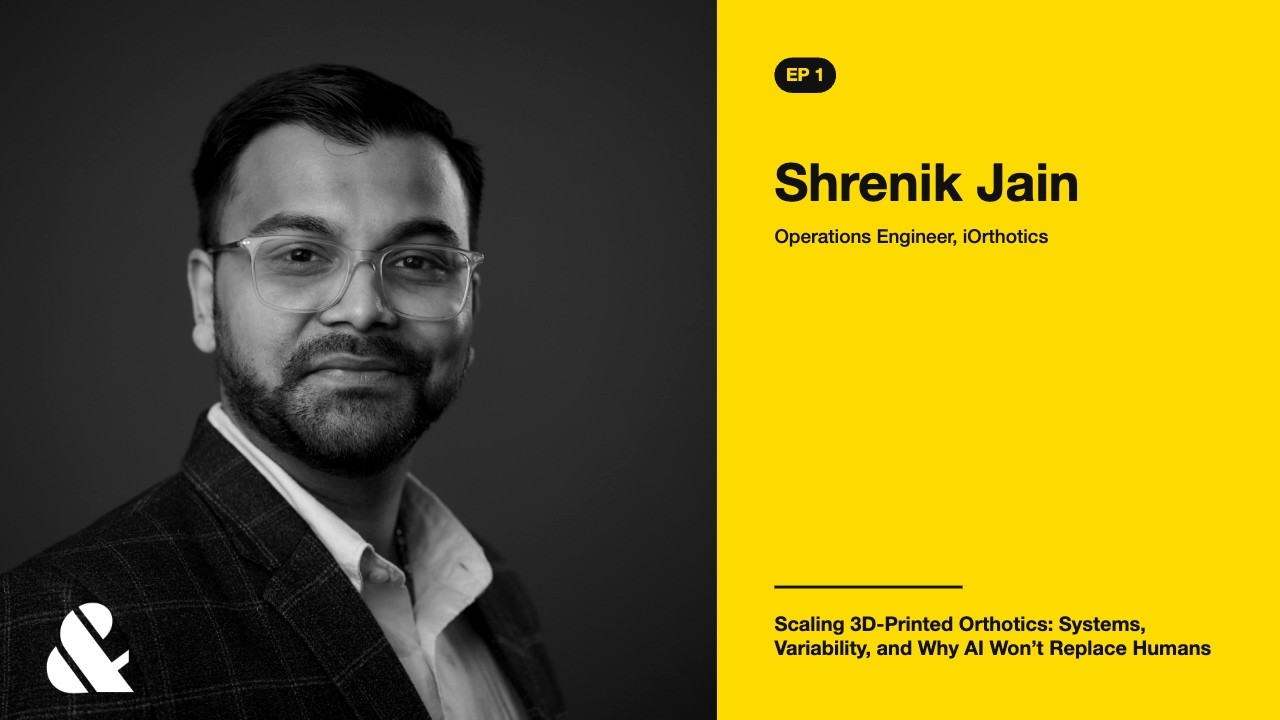 S2 · EP 01