Designing Tech That Feels Human
Dave Sheinkopf runs Smooth Technology. His work makes cutting-edge tech feel warm — on deadline, on budget.
 Christina Perla
 Dave Sheinkopf
Chapters
The conversation
Dave Sheinkopf runs Smooth Technology like a small R&D lab with a creative services side hustle. His firm has built interactive installations, hardware prototypes, and consumer products for brands and museums — and the thread connecting them is an allergy to tech that feels like tech.
The early part of the conversation lays out the studio's unusual shape. Smooth is a team small enough that Sheinkopf can still review every prototype, but experienced enough that their client list includes names most boutique shops couldn't land. The model, as he describes it, is built around a specific kind of talent: people who are equally comfortable in firmware, industrial design, and the kind of interaction work that blurs the line between the two.
Sheinkopf spends the early stretch on something he calls "interaction seams" — the moments in a product experience where the hardware or software gives itself away. A button that clicks but doesn't do anything for 400ms. A sensor that works in the demo but not in the kitchen. A screen that wakes up a half-second too late. These are the details that convert magical products into merely acceptable ones, and they're the details Smooth Technology optimizes against.
""The tech should disappear," he says. "If the customer is thinking about it, you've lost.""
Making the invisible legible
▸ Chapter · installation workSmooth's installation portfolio is where this philosophy is most visible. Sheinkopf walks Perla through a few pieces — an ambient-sound environment that responds to crowd density, an interface where touch is mapped to tactile feedback with sub-10ms latency, consumer hardware whose firmware roadmap is driven by UX complaints rather than feature lists. The work shares a signature: the user never sees the machinery.
The making-of details are rich. Sheinkopf talks about the weeks of latency tuning, the sensor-fusion work that's invisible in the output, the firmware iterations that chase a feeling rather than a spec. This is the kind of work that makes a portfolio look simple because all the complexity is hidden. It's also the kind of work that exists, stubbornly, outside the categories most clients know how to buy.
He's honest that this creates a sales problem. The studio has to educate clients on what they're paying for — not the widget, but the tuning. That's a harder sell than bill-of-materials and unit cost, but Sheinkopf argues it's the only thing that separates the products people love from the products people endure.
Deadline, budget, magic — pick three
▸ Chapter · shipping polishPerla presses on the economics — how do you deliver this level of polish on the timelines clients actually pay for? Sheinkopf's answer is about prioritization. The first version of the product has to be stable and convincing; the version that ships in Q4 has to be delightful. You use the intervening months to tune the details that clients can feel but not articulate.
He's specific about the discipline this takes. Feature requests get deferred. Bugs get logged and ignored. The team's attention goes to the handful of interactions that the whole product is judged by — the ones that happen in the first thirty seconds of use and the last thirty before the user puts it down. Polish, in his telling, is not evenly distributed.
"Polish isn't evenly distributed. It goes into the first thirty seconds and the last thirty."
The conversation ends on a counterintuitive note: Sheinkopf argues the best brief he's ever gotten wasn't from a Fortune 500 but from a museum curator, who asked for an installation that "made people forget they were in a museum." He frames this as the prototype for every subsequent brief — the goal isn't to show off the capability, it's to make the capability invisible. Everything else in the studio follows from that.
What's striking across the whole conversation is how unusual Sheinkopf's point of view actually is in a tech-product world that still sells features. Smooth Technology is built on the premise that features are necessary but never sufficient. The sufficiency is all in the tuning, and the tuning is the work.
More episodes
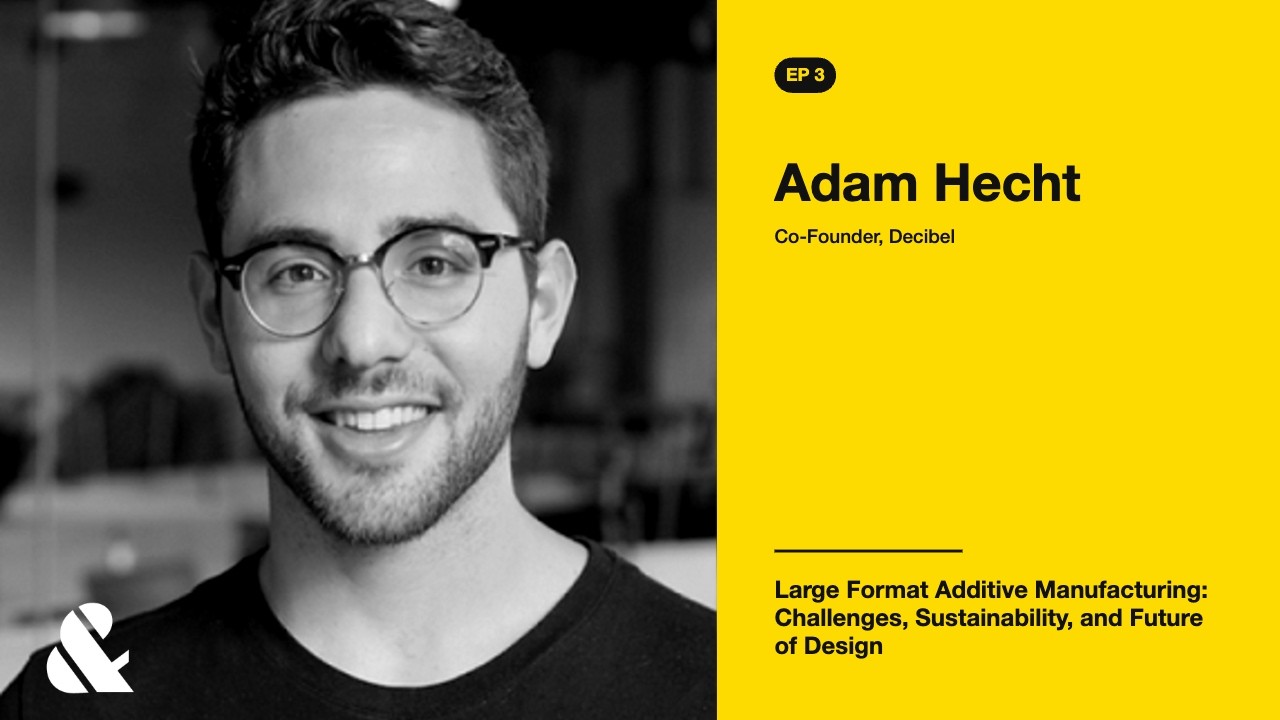 S2 · EP 03
Large Format Additive Manufacturing: Challenges, Sustainability, and Future of Design
 S2 · EP 02
AI in Engineering: Challenges, Innovations, and the Future of Manufacturing
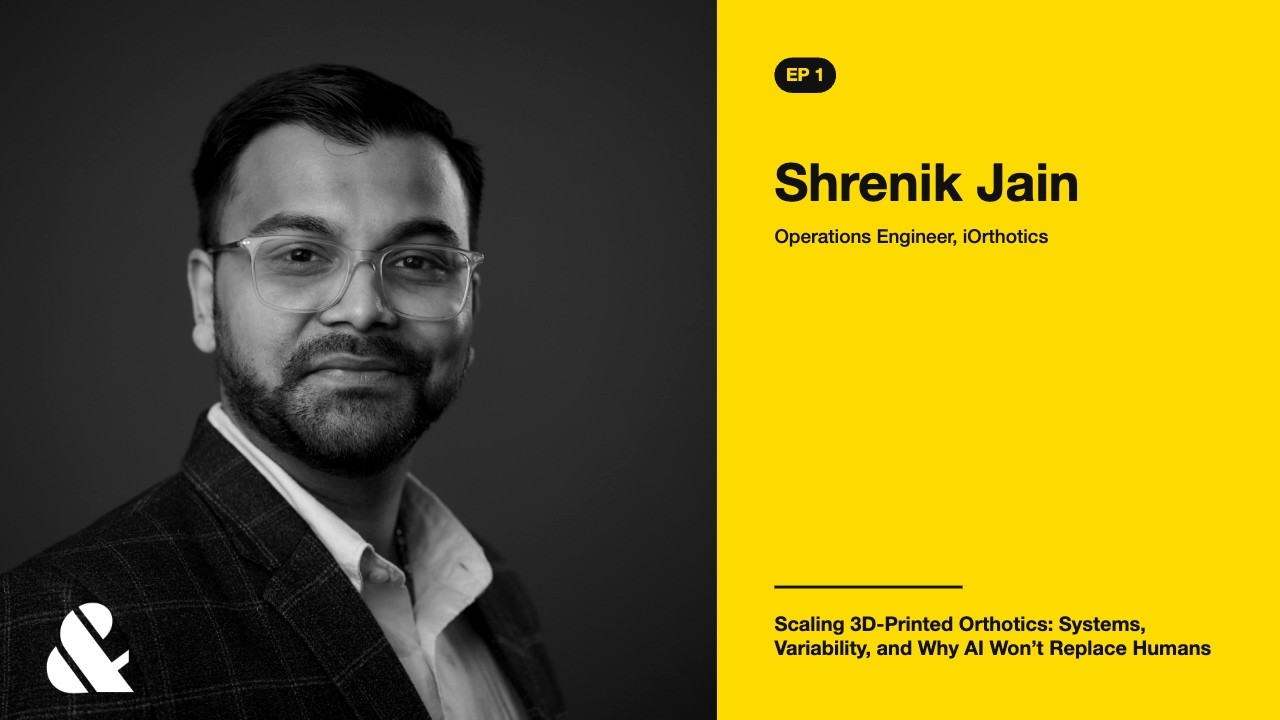 S2 · EP 01