Why Hardware Freelancers Are Winning
Nate Padgett built Informal on a bet: the best hardware work gets done by networks of freelancers, not agencies. Here's the pitch.
 Christina Perla
 Nate Padgett
Chapters
The conversation
Nate Padgett built Informal around a thesis that still sounds a little heretical when you say it out loud: the best hardware product design, most of the time, is being done by freelancers. Not by agencies. Not by in-house teams. By individual designers who've gotten good enough at the whole pipeline that a client needs exactly one of them, not a team.
Padgett is calm in the way of someone who's said this a hundred times. He doesn't need to convince Perla; she operates adjacent to the same market. What he lays out is the specific mechanics of how Informal actually works, and why — in his telling — the agency model is quietly losing ground to a network of senior operators.
The model Informal runs is deliberately small. Clients come in with a product problem. Padgett and his partner map it to one of a hundred-something independent designers in their network — the person who has actually shipped the thing this client is asking for. No internal pipeline, no agency markup, no junior work padding the bill.
""The agency model was built for a world where a senior designer couldn't run the whole stack," Padgett says. "That world doesn't exist anymore.""
What agencies get wrong
▸ Chapter · the pyramid problemThe sharpest section of the conversation is Padgett's critique of how traditional design agencies have adapted — or haven't — to the current market. He argues that the junior-to-senior pyramid that made agencies viable in the 2000s has quietly broken: senior designers are more productive with modern tools, juniors are harder to justify, and clients are too sophisticated to pay for learning-on-their-dime.
His answer isn't to replace agencies. It's to acknowledge that a significant share of the work they used to capture can be done faster and cheaper by individual operators who happen to have a decade of shipped products behind them. Informal is the connective tissue: the way a client finds the right one and trusts that the match is real.
Perla is visibly curious about the economics, and Padgett is generous with the answer. Informal takes a cut, the designer gets the majority, the client gets a senior designer doing the actual work. The trade-off, Padgett admits, is that this model doesn't scale the way VCs like. Informal can't ten-x its headcount without diluting the thing that makes it work — so they don't try.
Curation as the product
▸ Chapter · what Informal sellsWhat Informal actually sells, Padgett argues, isn't matchmaking. It's curation. Any client with LinkedIn can find freelance industrial designers. What they can't do is evaluate them. The network Padgett has built is specifically the subset of senior designers whose work he's seen in person, whose shipped products he's touched, whose clients he's talked to. That vetting is the product.
He's careful about who gets in. Informal has said no to designers with beautiful portfolios and weak manufacturing chops, to designers who want the network but not the accountability, to designers whose work looks senior but whose operating habits are still junior. The bar is unusual: you have to have done the work, and you have to have done it in a way that passes Padgett's sniff test.
"The network's value, he argues, is everyone he's said no to."
Toward the end, the conversation turns to what this means for designers earlier in their career. Padgett's advice is direct: you need three shipped products, a point of view, and the willingness to say no to work that isn't yours. Everything before that is the apprenticeship the agency system used to provide — and it's on the designer, now, to figure out how to earn it.
What lingers from the conversation is Padgett's deep comfort with Informal's size. The model he's built is the model he's chosen to stay inside. It's a small studio making a confident argument against the thing most of the industry still assumes is the default. That confidence comes from watching the market shift under everyone's feet for a decade — and betting correctly, more than once, on where it was going.
More episodes
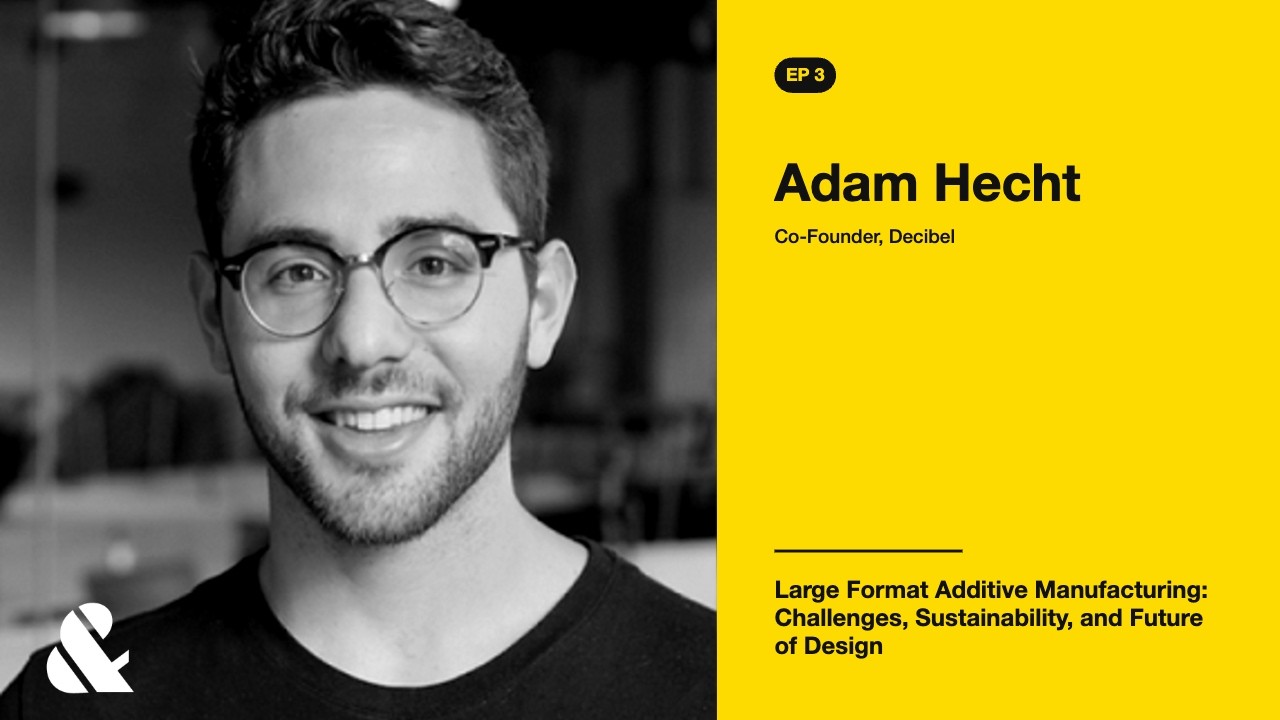 S2 · EP 03
Large Format Additive Manufacturing: Challenges, Sustainability, and Future of Design
 S2 · EP 02
AI in Engineering: Challenges, Innovations, and the Future of Manufacturing
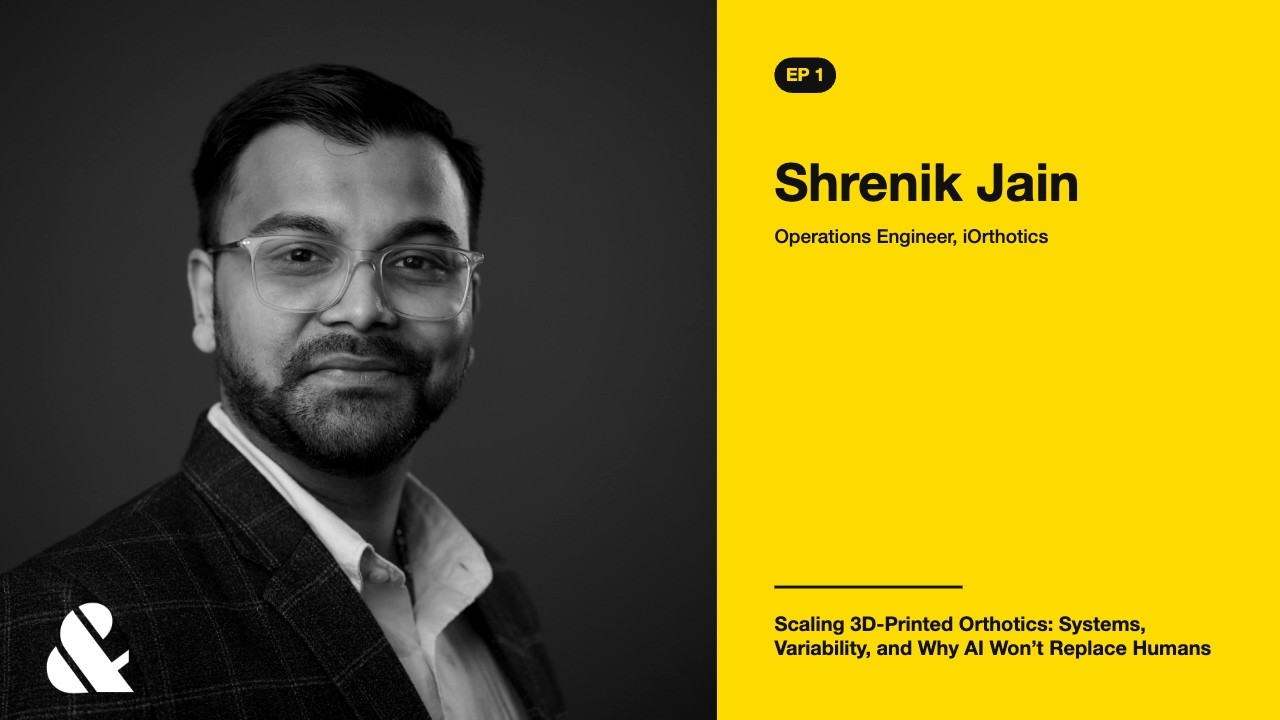 S2 · EP 01