Inside Colgate's Industrial Design Team
Daniela Macias on designing consumer products at global scale — what it takes to ship across a billion users.
 Christina Perla
 Daniela Macias
Chapters
The conversation
Daniela Macias' job at Colgate-Palmolive doesn't have a clean analog in most people's imagination of industrial design. She doesn't sketch. She doesn't render. She leads global experience design for a brand that sells to more than a billion people, and the scale of that fact shapes everything about how her team works.
Macias is patient with the explanation because the job doesn't fit the template. What she describes is a discipline at the intersection of design, research, and operations — her team's job is to translate consumer insight into product direction, and then to ride that direction through engineering, packaging, manufacturing, and retail, every one of which has a say in what the final object actually is. She calls it "experience" because no single discipline owns it anymore.
The early part of the conversation is about how a person ends up in a role like this. Macias' path ran through classic industrial design and then detoured through consumer research — which turned out to be the move that mattered. In-house design at this scale is less about proposing the shape of an object than about defending, with evidence, which consumer behavior the next object needs to serve.
"At Colgate scale, the design decision isn't "what should this look like." It's "what is still recognizable as this brand when it ships in 40 countries at four different price points.""
Designing for the median user
▸ Chapter · global consumerThe conversation spends real time on the constraint nobody talks about: global mass-market products are designed against a median user whose expectations vary wildly by geography. Macias is matter-of-fact about this — she treats it as a design constraint like material cost, not a political one. A toothbrush handle has to feel right in a hand in Mumbai and a hand in Minneapolis, and the only way to get there is research, not taste.
She walks through the research cadence her team runs. In-home ethnography. Retail observation. Usability studies that actually measure how long users spend on a product in the bathroom. This is qualitative work that most design programs don't teach and most design teams don't fund. At Colgate's scale, it's the only thing that keeps a new product from being a million-unit mistake.
What comes through is that Macias' team doesn't think in terms of "features." They think in terms of moments — the moment a consumer picks the product off the shelf, the moment they open the box, the moment they bring it to the sink. Each of those moments is designed against specific, testable criteria. It's a different vocabulary than agency or startup design, and it's one Macias has spent her career building fluency in.
Designing inside a legacy brand
▸ Chapter · heritage as assetA big part of the conversation is about what it means to design inside a company this old. Colgate's brand equity is the asset; a new hire's job is not to reinvent it but to understand which parts of it still serve consumers and which are due for an update. Macias describes this as the hardest thing to teach junior designers — the instinct for what to leave alone.
She's candid that the in-house path is underrated in the design community. Agencies and startups get the press. But the feedback loop for in-house designers, while longer, is orders of magnitude larger. A decision her team makes in a design review can show up on a shelf on every continent within 18 months. That scale isn't glamorous — it's sobering — and it changes how you think about a pixel.
"The hardest thing to teach junior designers, she says, is the instinct for what to leave alone."
For designers considering the in-house path, Macias' advice is almost boringly pragmatic. Learn to write. Learn to run meetings. Learn how your company makes money. The drawing part, she implies, takes care of itself. The career moves that matter are the ones that make you legible to the parts of the company that will ultimately decide whether your work ships.
The closing observation is simple but rare. Macias loves her job. She's been at Colgate long enough to have seen her own work on shelves across four continents, and the novelty hasn't worn off. Industrial design, in her telling, is the chance to affect more people than any other creative discipline — and the in-house path, for the right personality, is how you maximize that impact.
More episodes
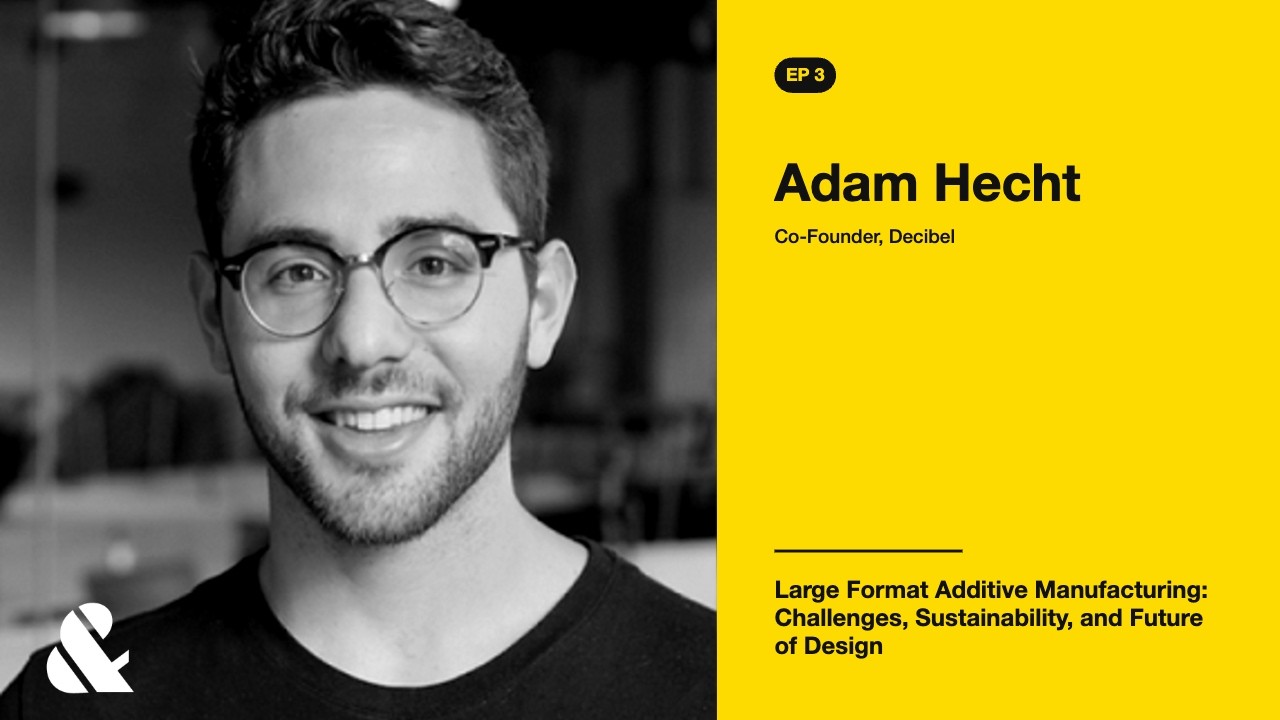 S2 · EP 03
Large Format Additive Manufacturing: Challenges, Sustainability, and Future of Design
 S2 · EP 02
AI in Engineering: Challenges, Innovations, and the Future of Manufacturing
 S2 · EP 01