How Inkbit Prints Parts That Come Out Pre-Assembled
Davide Marini on vision-controlled jetting, multi-material printing, and the future of parts that need no assembly.
 Christina Perla
 Davide Marini
Chapters
The conversation
Davide Marini talks about 3D printing the way a chemist talks about a reaction — all variables, trade-offs, and the slow work of getting one of them to break the ceiling the others have imposed. Inkbit, the company he runs, is built around the quiet bet that the thing holding additive manufacturing back isn't resolution or speed. It's assembly.
Over the course of the conversation, Marini patiently walks Perla through why most 3D printed objects still need post-processing, still need fitting, still need a human or a jig to put the pieces together. His pitch is that Vision Controlled Jetting — Inkbit's multi-material process, with an embedded 3D scanner watching every layer cure — collapses those steps into the print itself.
What makes the argument land isn't the technology. It's Marini's specificity about the cost. He talks about assembly the way a manufacturing engineer talks about it — as labor, tolerance stack-up, error propagation. Every joint is a place where the part can fail. Printing the assembly eliminates the joints. That framing, more than any spec sheet, is why Inkbit's pitch works on the audiences it needs to win.
"The parts he describes coming off the platform aren't almost-finished — they're mechanisms."
The case for Vision Controlled Jetting
▸ Chapter · the processVCJ uses inkjet-style heads to lay down photopolymer layers, and then — critically — a machine-vision system scans each layer before the next one is deposited. If a voxel comes out wrong, the system compensates on the following pass. The result is a process that can handle multiple materials in a single build, with tolerance control most additive technologies can't match.
Marini is candid that the process is slow by consumer-printer standards. But the comparison matters: VCJ isn't competing with desktop SLA. It's competing with small-batch injection molding, with multi-step assembly lines, with the whole post-print value chain. In that frame, it's not slow. It's a manufacturing replacement.
The applications he names are deliberately selective. Medical devices with over-molded seals. Consumer products with compliant hinges that can't economically be assembled. Prototypes that include a functional wire harness in the print. These aren't things VCJ does better — they're things other processes don't do at all. Inkbit's market isn't "people who print parts." It's people who currently cannot print the part they need.
A research company, commercial
▸ Chapter · MIT to marketInkbit's origin story is MIT — which Marini mentions the way someone might mention where they grew up. The underlying research was academic; the commercial work is now spread across an engineering team that's been building toward shippable machines for half a decade. What's interesting in the conversation isn't the provenance; it's how Marini frames the company's job now, which is less about pushing the science and more about finding the customers whose parts are actually impossible without VCJ.
The go-to-market choice he describes is counterintuitive. Most additive startups want to sell machines. Inkbit sells parts first — running Inkbit's own printers as a service bureau, producing parts for customers before trying to place a machine in their shop. The approach is slower but it produces the case studies that later sell the hardware.
Marini is honest about the hard edges. Material cost is real. Throughput is limited. Machine prices are high enough that a purchase is a strategic commitment, not a pilot project. The answer to every one of these is the same: a customer whose part is impossible without VCJ doesn't care about the price. A customer who's comfortable with an alternative process isn't the customer.
"Inkbit's market isn't "people who print parts." It's people who currently cannot print the part they need."
Toward the end, Perla asks the question anyone building hardware wants the answer to: what kind of designer should be thinking about VCJ right now? Marini's answer is practical — anyone whose bill of materials has two or more printed parts that currently need to be glued, threaded, or snapped together. Start there. Inkbit doesn't care about the rest.
By the time the conversation winds down, what sticks isn't the machine, or the research, or even the go-to-market. It's Marini's conviction — the operating belief that one process, done well, can remove a category of cost from a whole sector of manufacturing. He doesn't need VCJ to do everything. He needs it to do the thing that nothing else does.
More episodes
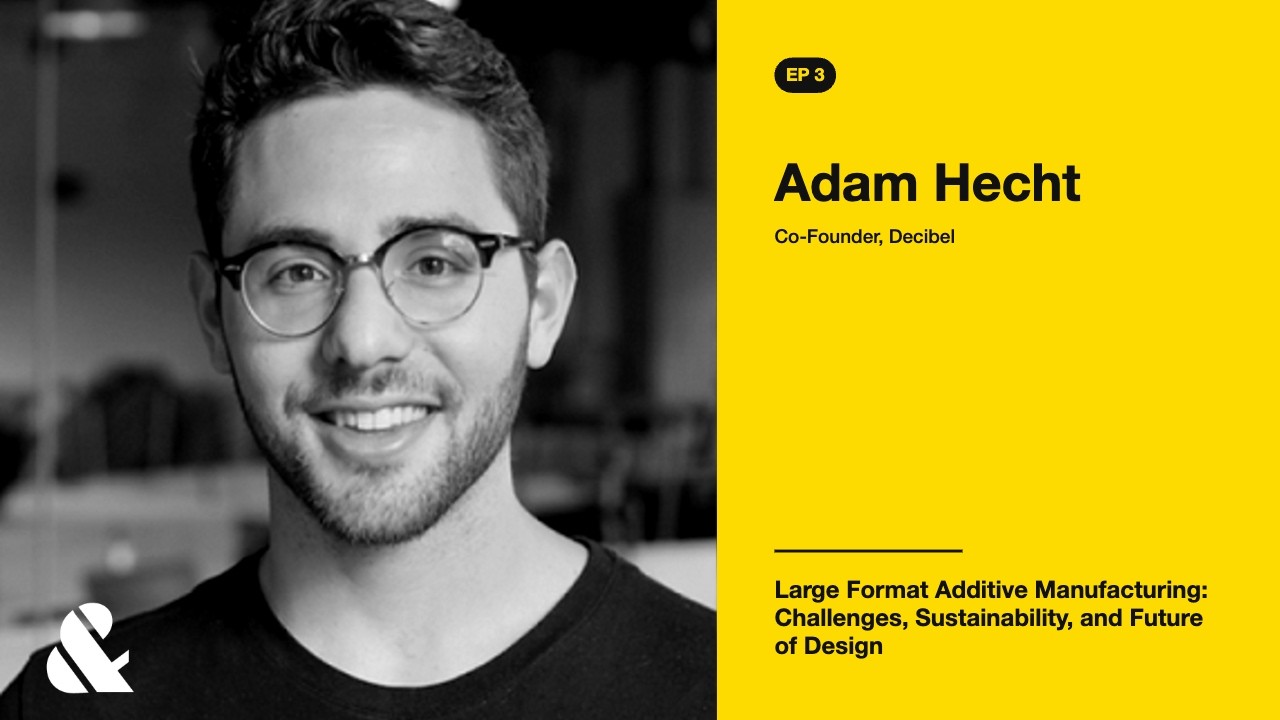 S2 · EP 03
Large Format Additive Manufacturing: Challenges, Sustainability, and Future of Design
 S2 · EP 02
AI in Engineering: Challenges, Innovations, and the Future of Manufacturing
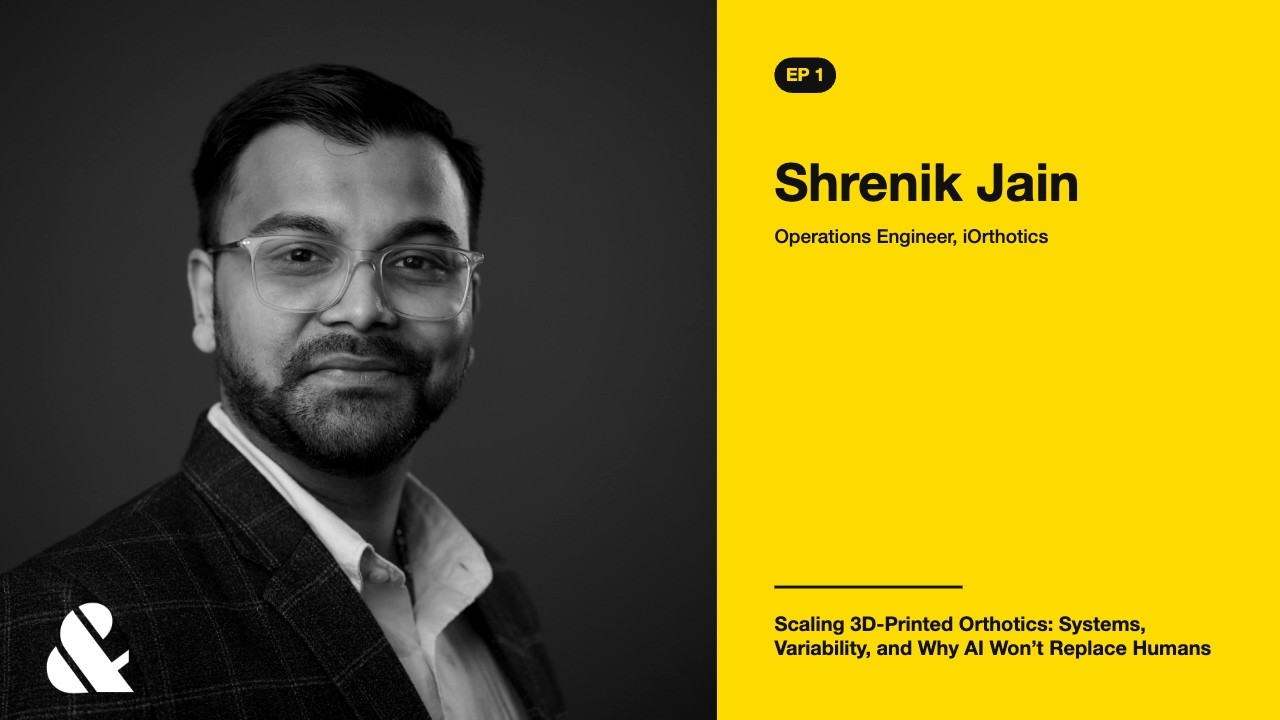 S2 · EP 01