Large Format Additive Manufacturing: Challenges, Sustainability, and Future of Design
Adam from Decibel joins Makelab's Talking Design & Engineering to unpack large-scale sustainable 3D printing, breaking down robotic pellet-based manufacturing and why toolpath design and layer cooling are the field's central engineering challenges.
 Cinerita Andrandes
 Adam Hecht
Chapters
The conversation
In a rapidly evolving technological landscape, Decibel is at the forefront of reshaping design and innovation through large-format additive manufacturing. Founded by a team passionate about combining creativity with technology, Decibel is bridging the gap between traditional design methods and forward-thinking solutions. The journey is as much about the process as it is about the product, with sustainability and innovation at its core.
##Forging a Path in 3D Printing
Decibel's inception was rooted in a desire to explore the possibilities of 3D printing beyond the conventional. As students and recent graduates, the founders embarked on a journey without a clear destination, driven by a curiosity to experiment and innovate. This approach led them to embrace large-format additive manufacturing, particularly in creating sustainable and impactful designs.
Their ambition? To transform 3D printing from a prototyping tool into a medium for creating high-quality, sustainable products in commercial spaces. By deploying advanced robotic systems and pellet extruders, Decibel has reimagined what is possible with 3D printing, enabling them to produce large, durable, and innovative pieces.
##The Coachella Experience
A standout moment for Decibel was their collaboration at the Coachella music festival, where they were tasked with creating custom benches for a unique oasis-themed installation. Time constraints and the need for brand alignment made additive manufacturing the perfect choice. Decibel's ability to print custom, durable pieces quickly demonstrated the technology's potential in creating functional art that embodies a brand's ethos.
##Innovation and Challenges in Manufacturing
While navigating the complexities of large-format 3D printing, Decibel has encountered and overcome numerous challenges. Scalability, material consistency, and the intricacies of post-processing are just a few hurdles they've addressed. The experience of printing large components has taught them to adapt and refine their processes continually. Their ability to pivot and leverage partnerships with other manufacturers highlights their commitment to growth and innovation.
##Sustainability as a Cornerstone
An unwavering commitment to sustainability underpins Decibel's operations. The team prioritizes using recycled, bio-based, and biodegradable materials, pushing the boundaries of what's possible within the circular economy. Decibel is not just creating products; they're inspiring a movement towards more responsible and conscious manufacturing.
##Vision for the Future
Looking ahead, Decibel envisions a world where spaces are enriched with printed products that are sustainable, tailored, and innovative. They aim to enhance their manufacturing capabilities by expanding their network, developing new materials, and advocating for the integration of 3D printing in mainstream design.
##The Collaborative Spirit
True to their roots, Decibel continues to foster collaborations with designers and companies around the globe. By merging design with technology, they are creating a platform for unique and impactful creations, encouraging more industries to embrace the potential of additive manufacturing.
More episodes
 S2 · EP 02
AI in Engineering: Challenges, Innovations, and the Future of Manufacturing
 S2 · EP 01
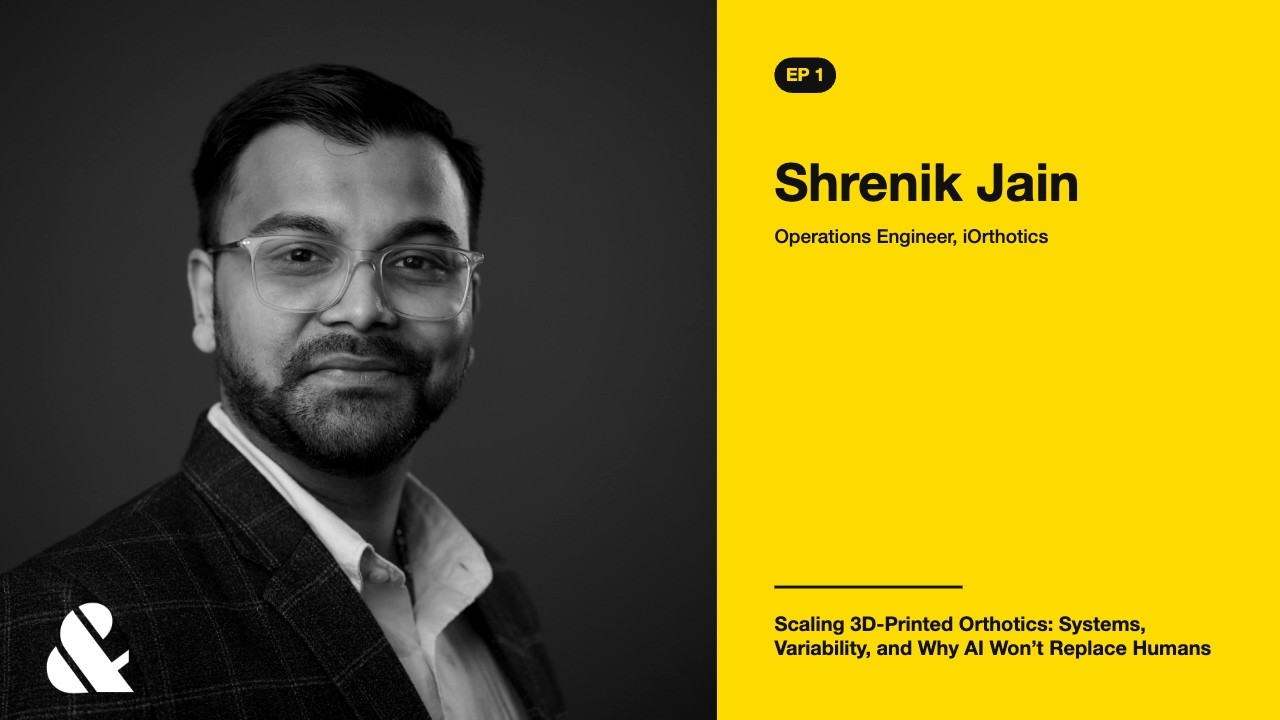
3D-Printed Orthotics: Systems, Variability, and Why AI Won’t Replace Humans
 S1 · EP 1165:57